Earlier today, we resurfaced a longstanding issue with Apple not consistently enforcing its rules related to iPhone apps advertising through notifications. It is a good time to share that we heard from multiple sources that Apple is planning to revamp the iPhone's notification system with iOS 28 next year.
The sources said iOS 28 will include significant changes to Notification Center, but we do not have any specific details. This is just a rumor. On Android 16 and later, you can filter notifications into News, Promotions, Social, and Suggested categories, and an equivalent iOS option if implemented would help to hide advertising clutter.
In the spot, a cyclops toy comes to life and becomes enamored with the iPhone 18 Pro Max. The toy takes photos, plays games, uses apps, listens to music, captures videos, makes calls, watches TV, and uses the flashlight for shadow puppets.
The iPhone 18 Pro Max lasts through all of it, remaining at half charge when the cyclops's battery dies and the toy falls asleep.
Apple's iPhone 18 Pro Max lasts up to 30 hours in "typical use," which is based on median iPhone usage. The metric includes messages, photo taking, music, social app use, streaming, games, browsing, and navigation.
The device lasts for up to 40 hours when streaming video, and up to 45 hours when watching downloaded videos.
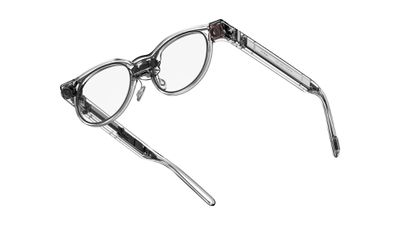
Hong Kong startup Savage Technology has announced its first product, "Orrorin Glasses," promising Vision Pro-style pinch controls and full-color displays for both eyes in a frame weighing just 45 grams.
The company describes the glasses as offering "Vision Pro–level interaction" and being around 25 times lighter than Apple's headset, including its external battery. Savage highlights the bulky hardware currently required for Apple's spatial computing experience, although Orrorin offers substantially fewer capabilities.
Savage says small pinches performed at the user's side control the interface without a ring, wristband, or controller. Eye tracking makes the display fade when the wearer looks away, rather than selecting interface elements as it does on Vision Pro.
That also distinguishes Orrorin from the Meta Ray-Ban Display, which costs the same $799 but has a screen for only the right eye and requires a Neural Band wristband for gesture control. Standard Ray-Ban Meta glasses have no displays. Orrorin lacks positional tracking and spatial mapping, so it cannot anchor virtual windows in a room like Vision Pro.
Orrorin is the first product from Savage Technology, co-founded by Bill Pei and Elena Shi, and remains in engineering validation for now. The company is currently targeting developers with third-party apps and interaction with AI agents such as Claude Code and Codex.
Apple is expected to launch its first smart glasses next year, although the initial model reportedly will not have displays, instead offering speakers, microphones, and Siri integration.
Orrorin reservations start at $29 toward the $799 price. Savage estimates shipments will begin in March 2027 for Founder Edition buyers and May 2027 for Early Bird buyers.
Note: MacRumors is an affiliate partner with T-Mobile. When you click a link and make a purchase, we may receive a small payment, which helps us keep the site running.
With the new T-Mix plans, both the 256GB iPhone Duo and iPhone 18 Pro models are available at no cost, but there is of course a catch. This would require the highest-priced T-Mix plan to get the most "Picks" that you could apply to your new iPhone purchase.
Thankfully, T-Mobile's new structure still allows for other deal options as well. For example, with the iPhone Duo you can still get up to $1,200 off via monthly bill credits by using three of your Picks and trading in an older device, or even up to $830 off via monthly bill credits with one Pick.
For the iPhone 18 Pro and iPhone 18 Pro Max, you can up to $1,400 off on an eligible T-Mix plan with five of your Picks. This offer requires qualifying credit, a new voice line, and a $35 device connection charge, after which you'll receive the offer via monthly bill credits.
In terms of older model iPhones, T-Mobile is offering four models of the 256GB iPhone 17e at no cost, plus four lines for $25 per line per month. You'll need to add four new lines on the T-Mix Standard plan.
You can check out our main post on all of the best Apple Black Friday deals for information on sales for Macs, iPads, Apple Watches, and more. If you're on the hunt for more discounts, be sure to visit our Black Friday roundup where we recap the best Apple-related bargains of the month.
Deals Newsletter
Interested in hearing more about the best deals you can find this holiday season? Sign up for our Deals Newsletter and we'll keep you updated so you don't miss the biggest deals of the season!
Apple has rules in place that are supposed to protect iPhone users from unwanted advertising in push notifications and Live Activities, but some apps appear to be flouting these rules, and Apple does not appear to be consistently enforcing them.
Apple's App Store guidelines do allow iPhone apps to send push notifications for promotions or direct marketing purposes, but only if users have "explicitly opted in to receive them via consent language displayed" in the app, and so long as the app provides a method "for a user to opt out from receiving such messages."
The guideline, in part:
Push Notifications should not be used for promotions or direct marketing purposes unless customers have explicitly opted in to receive them via consent language displayed in your app's UI, and you provide a method in your app for a user to opt out from receiving such messages.
Unfortunately, there are some examples of apps ignoring this guideline.
On my iPhone in Canada, there are several apps that send me push notifications containing promotions without offering a way to opt out of these promotion-specific notifications, such as Cineplex, McDonald's, and Wendy's.
Canadian food delivery app Skip does offer a setting to turn off promotional notifications, but it has continued to send them to me long after I opted out.
Do you have any iOS apps that don't respect your promo notification settings or don't let you turn off promo notifications as Apple requires?
Let me know for a MacRumors story!
Example: @SkipCanada sends me promo notifications long after I turned off that option in their app. https://t.co/NIhXEUghJ6
— Joe Rossignol (@rsgnl) November 25, 2026
A few MacRumors readers informed us that after they turned off DoorDash notifications for offers specifically and then place a delivery order, the app will prompt users to re-enable notifications so they "never miss an order update," even though they still have notifications enabled for order updates. The wording of this prompt can trick users into thinking that they might not receive order updates, but tapping the button re-enables offers.
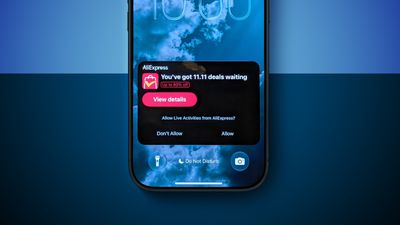
A few more readers pointed out that the AliExpress app has been advertising in Live Activities, despite Apple's app design guidelines saying "don't use a Live Activity to display ads or promotions" under "best practices." Apple's App Store guidelines say apps should not send users "unsolicited messages" via Live Activities.
Never expected to see anything like this https://t.co/GbdRIfqaE2
— Out of Galaxy (@OutofGalaxyy) November 22, 2026
If you know of other offending apps, let us know in the comments section. There are more.
Apple recently sent out its own App Store notification advertising a Paramount+ subscription deal, but the App Store does offer an option to opt out. Open the App Store, tap on your profile picture in the top-right corner, tap on Notifications, and turn off Recommendations & Offers. However, it is not clear if Apple obtained explicit consent from users as its App Store guidelines require. Of course, the App Store is a preinstalled app, so it technically does not have to follow the rules that Apple sets for third-party App Store apps.
PUSH ads now?! https://t.co/WRBndvxbE3
— Dylan (@DylanMcD8) November 21, 2026
All in all, it appears that Apple needs to do more to crack down on apps that are violating its rules surrounding advertising in push notifications and Live Activities.
Amazon today has sweetened the deals on Apple's 16-inch MacBook Pro with PROLED XDR Display, with up to $327 off these computers for Black Friday. You'll find discounts on every 16-inch model below, but we aren't tracking any sales on the 14-inch models yet.
Note: MacRumors is an affiliate partner with some of these vendors. When you click a link and make a purchase, we may receive a small payment, which helps us keep the site running.
Prices start at $3,200.00 for the 24GB RAM/1TB model, which is a $199 discount on the computer, coming in at $49 steeper than the previous low price. The overall biggest discount is on the 16-inch model with 48GB RAM/2TB, on sale for $5,072.00, down from $5,399.00, a big $327 discount.
You can check out our main post on all of the best Apple Black Friday deals for information on sales for Macs, iPads, Apple Watches, and more. If you're on the hunt for more discounts, be sure to visit our Black Friday roundup where we recap the best Apple-related bargains of the month.
Deals Newsletter
Interested in hearing more about the best deals you can find this holiday season? Sign up for our Deals Newsletter and we'll keep you updated so you don't miss the biggest deals of the season!
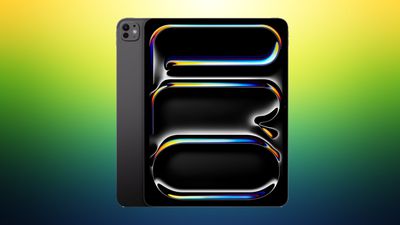
Apple has iPads running macOS internally and has had them "for some time," according to Bloomberg's Mark Gurman, although he says no work is currently being done to bring the Mac operating system to iPads.
Speaking on his latest Power On podcast, Gurman said there is "no work being done to consumerize macOS on the iPad." Rather, Apple will continue to bring Mac features and apps like Final Cut to iPadOS piece by piece. Gurman also argued that per-operating-system EU regulation gives Apple an incentive to keep distinct systems for each device. Apple recently dismissed merging iPadOS and macOS.
Apple's busiest season isn't over yet – far from it. With Black Friday kicking off this week, plus new products, software updates, and new smart home accessories running into December, there's more on the way from Apple before the end of 2026, so be sure to stick around.
Below, we've rounded up what's still coming, along with one date in particular that's worth watching if you're a holiday shopper.
Black Friday – November 27: Not a product launch unfortunately, but a date likely worth marking. Apple's annual four-day shopping event runs from Friday, November 27 through Monday, November 30, with gift cards worth up to $300 offered with eligible purchases. Apple is also offering new and qualified returning subscribers the Apple TV streaming service for $6.99 per month for six months, with that deal available until November 30. Our Black Friday roundup will be tracking all the deals.
(PRODUCT)RED AirPods Max 2 and HomePod mini 2 – expected December 1: Apple plans to release (PRODUCT)RED versions of the existing AirPods Max 2 and HomePod mini 2 on or around Tuesday, December 1, which is World AIDS Day, according to Bloomberg's Mark Gurman. The new color is expected to be the only change. Apple is also releasing a red Wrist Strap for AirPods Pro and a red Sport Band for the Apple Watch.
Apple Music Replay – expected December: The full 2026 Replay recap is likely to arrive around the same time as last year's, when the full version became available on December 2, with your top songs, artists, and listening stats for the year.
iOS 27.3 – December: Apple says iOS 27.3 will be released to the public in December, though it hasn't given a date. The first iOS 27.3 beta arrived on Tuesday, November 3. Beta features can change before release, but so far it includes new Siri AI actions across apps, vertical tabs and an Adaptive Dark Mode in Safari, the redesigned Health app, a new Apple Fitness+ Gym Strength workout that builds a four-week plan, and more. Our iOS 27.3 beta guide has the full list.
Apple Intelligence in China – December: The first Apple Intelligence features for users in China are already in testing in the iOS 27.3 beta, and Apple has confirmed the public rollout for December alongside the update. Apple has partnered with Alibaba to add Qwen support to Siri, Writing Tools, and Visual Intelligence. The initial release is for supported iPhones, with other platforms to follow after the required regulatory approvals, and it does not include Siri AI.
Apple Home Collection – from December: The new Apple-backed, third-party lineup includes smart home cameras, thermostats, and a lock designed with LG Electronics and Schneider Electric. Apple says that availability begins in December, although select accessories will not arrive until early 2027.
Stay tuned to MacRumors for all the latest news, announcements, updates, and deals.
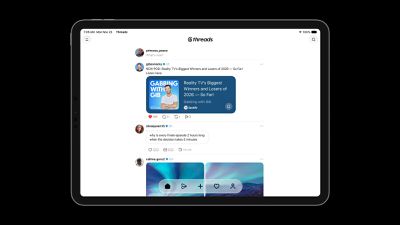
Threads has released a native iPad app. Threads design head Christopher Clare said on Monday it was coming "very soon," and it has since appeared on the App Store. This first version is a single-column feed, even in landscape. Clare has said the team prioritized "getting out a v1," so expect changes to come. The update also adds cashtags for following stock discussion, buy they are rolling out gradually.
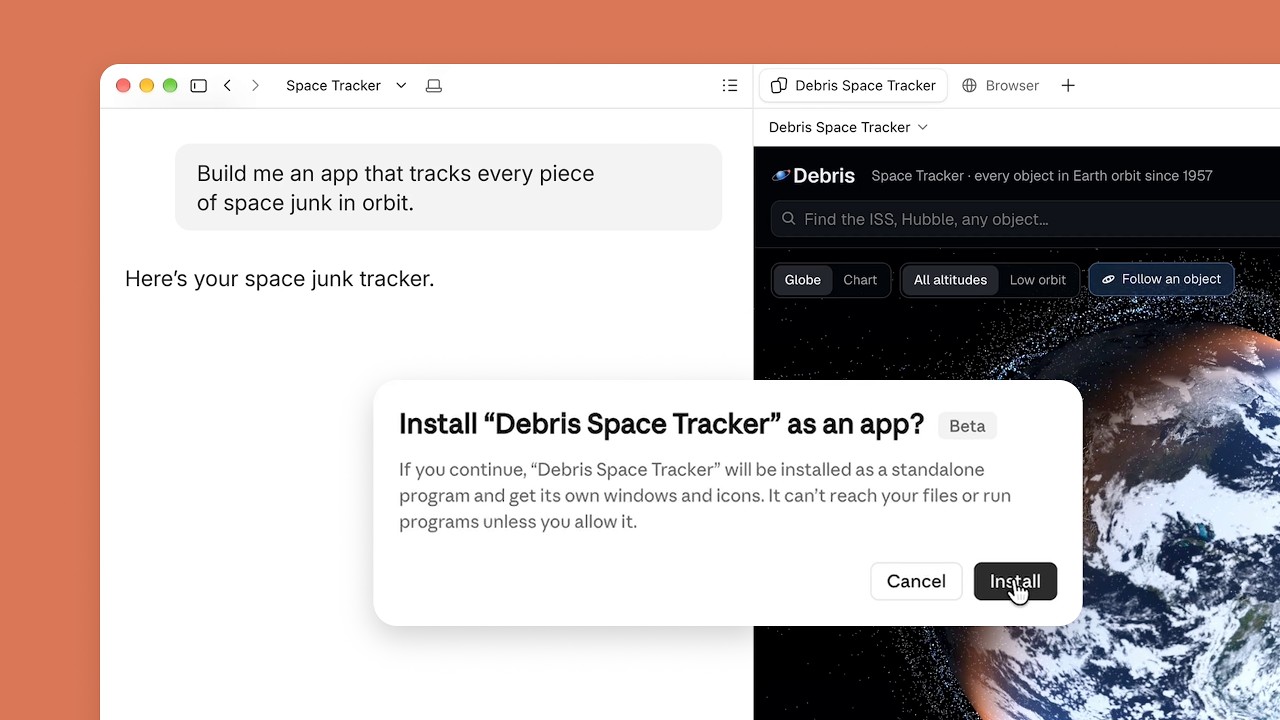
Artifacts are documents, designs, dashboards, and interactive tools that Claude creates in a panel alongside your chat, where you can view and edit them.
When you ask Claude to create an artifact, you can now click "Install as app" in the Share menu, after which you'll be able to launch it in its own dedicated app window and see it in the Dock.
Artifact-based apps don't need to be packaged or signed, but they do need a permission level to be set. Choosing Default permissions means they can only do what they'd be able to do in a browser, while giving them higher App permissions means they can do things like create always-on-top windows, listen for global keyboard shortcuts, and send notifications. Full computer access means apps can run programs and read, change or delete files without asking each time.
Apps can be used with connectors, and they include an option to add a menu bar item. Apps also update automatically when the underlying artifact is edited, and each change prompts a new permissions request. Anthropic has made some example apps available to try and to give users an idea of what's possible.
Anthropic says building an app and any calls it makes to Claude count toward usage limits. The feature remains in beta and is available on all plans in Claude Desktop, though Enterprise users will need to switch it on manually first.
Streaming music service Tidal today said it plans to start blocking AI music on December 9. Any track generated entirely with AI will be removed from the platform, with Tidal rejecting AI songs in the future.
Tidal lead Robert Andersen said 43 percent of tracks uploaded in the last 90 days have been flagged as AI-generated. Approximately 29 million songs will be deleted and Tidal expects 80,000 to 85,000 songs to be rejected per day.
AI music will start disappearing on December 9 and will be "completely gone" at the beginning of 2027. AI-assisted music will continue to be allowed, since the policy is only for songs made entirely with AI tools. Tidal previously demonetized AI music, but removing it goes a step further.
Andersen said Tidal believes the move will "resonate with both artists and listeners alike" because 96 percent of AI songs get zero plays.
Apple hasn't banned AI songs from Apple Music, but it introduced AI Transparency Tags earlier this year. Apple is relying on labels and distributors to disclose when AI has been used, and it said in August that tracks "materially generated using AI" must have a "Made With AI" label.
In April, Apple Music VP Oliver Schusser said that more than a third of monthly uploads to Apple Music are 100 percent AI-generated, but AI music accounted for less than 0.5 percent of actual listening.
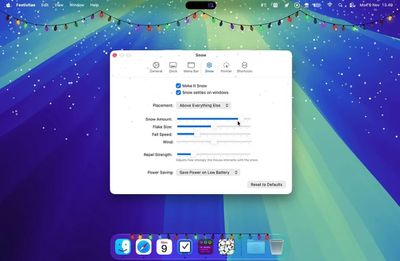
Festivitas is a fun little holiday-themed Mac app that developer Simon Støvring introduced two years ago and has been updating since. Its main purpose is to add lights to the Mac's Dock and menu bar, but there's also a version for the iPhone and iPad.
The holiday 2026 Festivitas update adds new customizations. For the first time, you can upload custom bulb shapes. There's an option to import an image and convert it to a bulb in a string of lights. Simple PNGs on a transparent background produce the best results, and for more complex images, bulbs can use the original colors.
You can customize light shapes, color, size, opacity, drop height, cable thickness, and more in the Settings. Lights can animate with different patterns, like pulse, twinkle, chase, and wave.
There are pointer decorations like sparkles, bubbles, falling leaves, confetti, a Christmas tree, a wreath, and more. Falling snow will now pile up on top of app windows for an added holiday effect. You can adjust snow rate, density, and flake size.
Snow and lights can be displayed above app windows or just on the desktop, with lights also visible on the Dock. Shortcuts can be used to play music and turn on lights, activate the snow effect if the weather forecast includes snow, and start a snowstorm.
Along with custom bulb shapes and falling snow, Festivitas for the iPhone and iPad now fully transparent animated widgets on the without a screenshot workaround.
Festivitas for Mac requires some accessibility access to work. I asked Støvring about Apple's planned permission changes in macOS 27.3, and how they will affect the Festivitas app. He said Festivitas gets far more access than it needs because Apple's options aren't granular enough, and he'd prefer to ask for less access.
Menu bar lights, snow, and pointer effects work without the System & App Protection Override permission, while lights in the Dock and snow landing on windows require access.
Festivitas for the Mac offers customer-chosen fair pricing starting at 4.39 euros, and it can be downloaded from the Festivitas website. The iPhone and iPad app is available for free from the App Store, and it too offers customer-selected fair pricing between $3.99 and $9.99. The updates are free for existing users. [Direct Link]
Meta today expanded what Muse can do in Instagram, making the personal AI agent more useful.
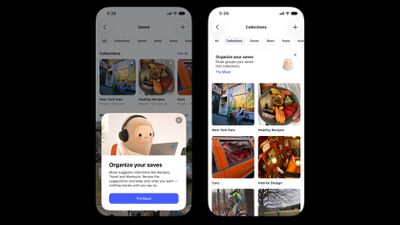
Muse can organize the Instagram content you save into collections or travel itineraries, plus it can make grocery lists for recipes you find. Meta says you can also chat with Muse in DMs to learn more about a post or catch up on what you've missed.
When saving a post on Instagram, users in the U.S. and Canada will see an option to have Muse organize their posts. Muse in DMs will show up as a standard conversation.
As TechCrunch points out, Muse for Instagram DMs lets users chat with the AI agent without having to switch from Instagram to the Muse app and back again. Conversations with Muse on Instagram will also appear as a side chat in the Muse app.
Muse won't make changes or take actions without user permission. Muse support for Instagram DMs is rolling out in the U.S., Canada, Mexico, Japan, and Singapore starting today.
Google's Chrome for Developers team today supported Mozilla's complaint about Apple's rules on non-WebKit browser engines in the European Union, calling out restrictions that make launching an alternative engine too difficult.
Mozilla recently joined a coalition of up to 55,000 businesses and organizations to ask the European Commission to force Apple to change its browser rules. Apple started allowing alternative browser engines in the EU in early 2024, but the coalition says no browser maker has been able to transfer its EU users from Apple's WebKit engine to a new engine because of Apple's conditions.
Mozilla explained that using its Gecko browser engine instead of WebKit would require releasing a second Firefox app. Apple says apps with alternative browser engines have to be distributed only in the EU, so Mozilla has been unable to add Gecko to its existing app. Firefox users in the EU would need to transfer to a new app and move all their content, and many users might not be willing to switch. Mozilla said Apple's conditions are "unworkable" and that Apple has only complied with the EU's Digital Markets Act "on paper."
Chrome for Developers echoed the statement in its X post:
We agree with @mozilla. Nearly 3 years after alternative browser engines on iOS were EU-mandated, zero launched due to remaining Apple restrictions. Forcing browsers to ship separate apps and re-acquire users is choice on paper, not in practice.
Though one Google team expressed support for Mozilla, Google did not sign the open letter to the European Commission. In 2023, Google started work on an experimental version of Chromium for iOS with the Blink engine, but Google said it was only a prototype that would not be released.
In June 2025, Mozilla and Apple participated in a DMA workshop where Mozilla brought up iOS support for third-party browser engines. According to Mozilla, Apple claimed Google and Mozilla have "everything they need" to ship an alternative browser engine in the EU and "have chosen not to do so." In its documentation for alternative browser engines, Apple says its requirements help keep users safe online.
Following the open letter, the European Commission said it is in talks with Apple over its browser engine restrictions. It is also consulting Mozilla and other signatories on how rival browsers can compete with Safari on Apple devices.
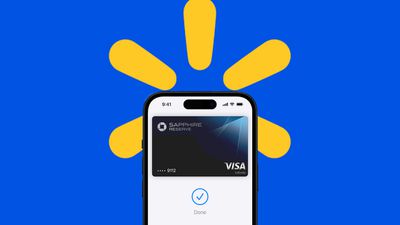
Walmart recently added Apple Pay support to its iPhone app and website, but it removed the option just weeks later, according to Appleosophy's David Becker. The reason for this reversal is unknown. Walmart still accepts Apple Pay in its U.S. stores, after finally deciding to roll out tap-to-pay support earlier this year.
We can confirm that we do not see Apple Pay on Walmart's website or in the Walmart app in the U.S., but some users may still see it. Walmart could be A/B testing.
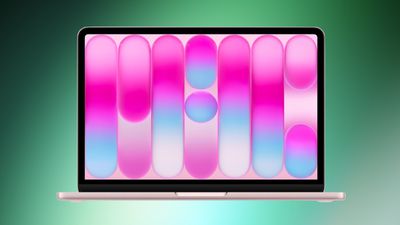
Amazon has a major sale on the MacBook Neo, discounting the 512GB model with Touch ID down to $699.00, from $799.00. Only the Blush color is available at this record low price.
Note: MacRumors is an affiliate partner with some of these vendors. When you click a link and make a purchase, we may receive a small payment, which helps us keep the site running.
This is a $100 discount on the MacBook Neo, and it's now the best price we've seen on the 512GB model since Apple's price increases over the summer. There's also a $50 discount on the 256GB MacBook Neo, available for $649.00, down from $699.00, which is a second-best price.
You can check out our main post on all of the best Apple Black Friday deals for information on sales for Macs, iPads, Apple Watches, and more. If you're on the hunt for more discounts, be sure to visit our Black Friday roundup where we recap the best Apple-related bargains of the month.
Deals Newsletter
Interested in hearing more about the best deals you can find this holiday season? Sign up for our Deals Newsletter and we'll keep you updated so you don't miss the biggest deals of the season!
Note: MacRumors is an affiliate partner with some of these vendors. When you click a link and make a purchase, we may receive a small payment, which helps us keep the site running.
This compares to the current price of $12.99/month for the Disney+/Hulu bundle (with ads). There's also the option of going ad-free with the Premium tier at $14.99/month for your first year, down from $21.99/month.
To get the deal, head to the promotion landing page on the Disney+ website and click on the Disney+/Hulu bundle option. This offer is valid only for new and eligible returning subscribers, and it runs through November 30.
You can find all the Apple Black Friday Deals currently available in our dedicated post. For everything else, we're keeping track of the season's best Apple-related deals in our Black Friday roundup, so be sure to check back throughout the month for an updated list of all the most notable discounts you'll find for Black Friday 2026.
Deals Newsletter
Interested in hearing more about the best deals you can find this holiday season? Sign up for our Deals Newsletter and we'll keep you updated so you don't miss the biggest deals of the season!
Signal is extending screenshot-blocking protections to iPhones and supported Android devices to prevent AI assistants such as Siri and Gemini from capturing private conversations.
In its announcement, Signal said AI assistants can capture messages displayed on screen, potentially exposing conversations to processing outside the app. End-to-end encryption protects message delivery, but cannot prevent another app from reading messages visible on a recipient's device.
On iPhones running iOS 27, the new "Block Siri AI" setting is enabled by default in Signal version 8.37 or later. It blocks screenshots, screen recordings, and AI screen-reading. On supported Android devices running Signal 8.35.1 or later, screen security activates when an AI assistant attempts to read the screen.
iPhone users can disable the protection under Signal's Settings → Privacy → Block Siri AI, either permanently or for 10 minutes to take a screenshot. Apple also offers an Excluded Apps setting under Settings → Siri that prevents Siri from accessing selected apps.
Signal previously blocked Microsoft's Recall from capturing chats on Windows 11. It said equivalent screenshot blocking is unavailable on macOS and recommends excluding Signal from Siri there. The company is asking Apple, Google, and Microsoft for better tools to keep app content out of AI systems.


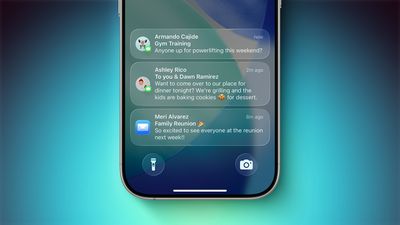 Earlier today, we resurfaced a longstanding issue with Apple not consistently enforcing its rules related to iPhone apps advertising through notifications. It is a good time to share that we heard from multiple sources that Apple is planning to revamp the iPhone's notification system with iOS 28 next year.


 Note: MacRumors is an affiliate partner with T-Mobile. When you click a link and make a purchase, we may receive a small payment, which helps us keep the site running.
 Note: MacRumors is an affiliate partner with some of these vendors. When you click a link and make a purchase, we may receive a small payment, which helps us keep the site running.
 Apple has iPads running macOS internally and has had them "for some time," according to Bloomberg's Mark Gurman, although he says no work is currently being done to bring the Mac operating system to iPads.

 Threads has released a native iPad app. Threads design head Christopher Clare said on


 Walmart recently added Apple Pay support to its iPhone app and website, but it removed the option just weeks later, according to
 Note: MacRumors is an affiliate partner with some of these vendors. When you click a link and make a purchase, we may receive a small payment, which helps us keep the site running.
 Note: MacRumors is an affiliate partner with some of these vendors. When you click a link and make a purchase, we may receive a small payment, which helps us keep the site running.