The second beta of iOS 27.3 includes a new "Ask About Page" feature for Siri AI.
Siri can see the entire content of a webpage, including content that isn't currently in view on the screen. If you're looking at a website with a long menu, for example, you can ask Siri to surface all of the options that are gluten-free. Or if you're getting ready for a trip, you can ask Siri to read through a long guide and put together a packing list based on what's on the page.
Right now, Siri has on-screen intelligence, but it relies on what's in view. Access to a full webpage will make Siri more useful for summarizing content.
In the first beta of iOS 27.3, Apple expanded what Siri can do in and across apps like Calendar, Files, Finder, Journal, Mail, Maps, Messages, Music, Notes, Photos, Preview, Reminders, Safari, Shortcuts, and Weather.
In Mail, for example, Siri can unsubscribe you from mailing lists and undo recently sent messages. In Weather, Siri can add locations to your weather list, or control weather notifications. In Safari, Siri can clear browsing history, manage tabs and windows, save articles to a Reading List, and close duplicate tabs. In Files, Siri can organize content, delete files you haven't accessed for a set period of time, and more.
Apple is also allowing third-party integration for Siri AI, so any app will be able to bring its contents and actions directly into Siri AI.
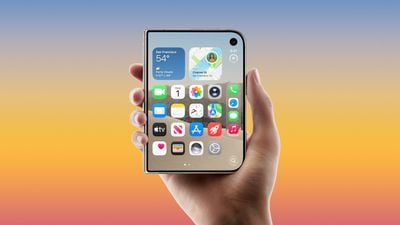
Apple's marketing chief Greg Joswiak today announced that more than 200,000 apps are now optimized for the iPhone Duo, up from 100,000 earlier this month. This refers to apps built with the iOS 27.1 SDK or later, which fill the full width of the iPhone Duo's inner and outer displays and have vertical controls in the status bar.
Apple today added a new option for unlocking the iPhone Duo using the front-facing camera, giving device users multiple ways to access their content. The feature is available in the second iOS 27.3 beta.
The option to unlock with facial recognition is only available on the Lock Screen, and authentication via Touch ID is still needed for Apple Pay purchases, adding passwords and logins, and more.
Unlocking with the camera requires a recent Touch ID or passcode authentication, and Touch ID is required again after about 45 minutes of inactivity. Unlocking with the front camera can be enabled in the settings app under Touch ID and Passcode.
Apple is also adding a new option to lock the iPhone Duo when it's closed rather than transferring content to the front display. The is available under Display and Brightness in the Settings app.
Every Apple device gets a free daily access allowance for Siri AI and Apple Intelligence features that rely on server-side AI processing, such as Image Playground and Clean Up in Photos. When that limit is hit, there will be an option to extend usage with an iCloud+ plan. Here's what will be limited after the daily allowance has been reached:
Siri AI for multi-step, personal context requests that rely on server-side processing, such as asking Siri what time you need to leave from home to make it to a location on time.
Image generation and editing tools, including Image Playground and the AI options in Photos like Clean Up, Extend, and Spatial Reframing.
Workflows and automations in Shortcuts that rely on AFM Cloud and AFM Cloud Pro.
Third-party apps that use Apple Foundation Models in Private Cloud Compute for AI features.
While more complex, multi-step requests will be restricted, basic Siri commands will continue to be available even after a device limit is reached. Examples of basic Siri commands include those with a single ask, such as "set a timer for 30 minutes" or "text Eric I'm on my way."
Apple's existing iCloud+ plans will include higher daily usage for Siri AI and Apple Intelligence, with no change in pricing. If you already subscribe to an eligible iCloud+ plan, you will have higher usage limits. Free limits are per device, not per account, and do not roll over.
More access starts with the 200GB iCloud+ plan, which is priced at $2.99 per month. Users who subscribe to this plan have up to a 2x usage limit. Users who subscribe to the $9.99/month 2TB plan get up to 5x usage. The $29.99/month 6TB plan comes with up to 10x usage, and the $59.99/month 12TB plan offers up to 20x usage. Family members who share a plan will have a shared usage pool.
50GB - No limit increase
200GB - Up to 2x limit
2TB - Up to 5x limit
6TB - Up to 10x limit
12TB - Up to 20x limit
Every Apple device will use the free daily limit first, and when that's reached, Siri AI and Apple Intelligence will use the iCloud+ paid access. In a family group, a device that hits the free limit will start drawing from the shared pool on a first-come, first-served basis. Limits will reset at around 12:00 a.m. in the user's current time zone, and in families, the reset is based on the plan purchaser's time zone.
Each of the four categories has a different limit, and Apple will likely use the beta testing period to refine those limits and make sure people aren't hitting their caps too quickly. Limits depend on feature category, request complexity, and system demand, and they could change over time.
Apple plans to give warnings when people are approaching their limits, and a notification when the limit has been hit. From there, users will be able to purchase additional access through an iCloud+ plan, or wait for their limit to reset.
Apple is not planning to offer additional usage beyond what's available with the 12TB iCloud+ plan at this time.
Apple today seeded the second betas of upcoming iOS 27.3 and iPadOS 27.3 updates to developers, with the software coming two weeks after the first betas were released.
Registered developers can download the betas by going to Settings > General > Software Update and opting in to the developer beta.
iOS 27.3 adds a new Vertical Tabs layout option that moves Safari tabs to the left side of the display. There's also an Adaptive Dark Mode for Safari that can turn light sites darker when Dark Mode is activated.
Siri AI can do more in and across apps with support for actions in Calendar, Files, Journal, Mail, Maps, Messages, Music, Notes, Photos, Preview, Reminders, Safari, Shortcuts, and Weather.
The new Health app is back, the iPhone Duo now supports Reachability, and there's a new Apple Music Selfie Sing feature if you want to capture videos of yourself while you do karaoke. There are more features too, with a list available in our iOS 27.3 beta guide.
Starting today, Apple is making its U.S. website available in Spanish. Customers who have Spanish set as their language will be able to browse apple.com/us-es by default, and anyone will be able to choose Spanish from the country and language selector at the bottom of the website.
While most of the site will be available in Spanish, the Apple Online Store and Financial Services will be in English only. Customers who visit the Apple Online Store can shop in Spanish by contacting an Apple Specialist by phone.
There's already a U.S. Spanish version of the Apple Support site, so the change to the main website brings it in line with support options.
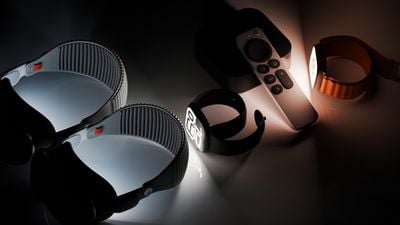
Alongside new betas of iOS 27.3, iPadOS 27.3, and macOS Golden Gate 27.3, Apple has released the second betas of watchOS 27.3, tvOS 27.3, and visionOS 27.3. The software comes two weeks after the first software betas were released.
Registered developers can download the betas through the Settings app on each device.
Two new Audio Intelligence features are coming to the Apple Watch Series 12 and Apple Watch Ultra 4 in watchOS 27.3. Live Rewind will allow users to double-press the Digital Crown to get a transcription of what was said in the last 15 seconds, while Siri Recap will turn conversations users have had during the day into summary notes.
There's no word on what might be added in visionOS 27.3 or tvOS 27.3. We're expecting the updates to come out in December.
Some owners of Apple's new MacBook Pro with PROLED XDR display say they experience eye strain, headaches, and dizziness when using the laptop, with affected users pointing to the screen's brightness-control system as a possible explanation.
A significant number of complaints have appeared on Reddit, X, and the MacRumors forums since the new models launched earlier this month. The discussions on MacRumors include a dedicated PWM thread, a separate owner poll, and comments in the reviews and display-details threads.
On X, one user said trying the PROLED MacBook Pro in an Apple Store for around 30 minutes left them with a severe headache. The user said they had previously struggled with OLED screens before finding newer implementations tolerable, and called for an option to change the Mac's dimming behavior.
A Reddit user described how reading text, especially against a black background, brought on dizziness and nausea. They said their OLED iPad Pro did not produce the same symptoms. In the main MacRumorsforum thread, a 16-inch PROLED owner reported a headache and mild nausea that began to ease after switching back to a mini-LED MacBook Pro. Another member, posting in the separate poll thread, said they were returning their PROLED laptop for similar reasons after previously having no difficulty with OLED devices.
The suspected issue is pulse width modulation (PWM). An OLED screen produces light through its individual pixels. With PWM dimming, the display changes the time spent at brighter and darker levels during a rapidly repeating cycle. Spending less time at the brighter level reduces the average amount of light reaching the viewer, making the screen look dimmer.
Those fluctuations can occur too quickly to look like an obvious flashing screen, but some people report discomfort with displays that use them. PWM frequency describes how often the brightness cycle repeats. It is different from refresh rate, which is how often the displayed image updates, so a 120Hz ProMotion specification does not tell you the screen's PWM frequency.
Notebookcheck's testing of the 14-inch PROLED MacBook Pro recorded 240Hz flickering whenever brightness was set to 99% or lower, with a measured amplitude of 56%. In other words, the light output fluctuated 240 times per second, and the amplitude describes the size of those fluctuations. The publication warned that sensitive users could experience eye strain or headaches due to the specification.
Mini-LED MacBook Pro displays also use brightness modulation, but Notebookcheckmeasured a much higher frequency of 14,880Hz on the 14-inch M4 Pro model. Such rapid fluctuations are generally less likely to cause discomfort for PWM-sensitive users.
Apple already provides a Display Pulse Smoothing accessibility option on supported iPhones. The setting offers another way to dim the OLED screen at low brightness, although Apple cautions that it can affect display performance under some conditions. macOS does not offer an equivalent control, but Apple could add one in the future.
The OLED MacBook Pro models start at $2,899 for the 14-inch version and $3,399 for the 16-inch version. Apple continues to sell the mini-LED models alongside them.
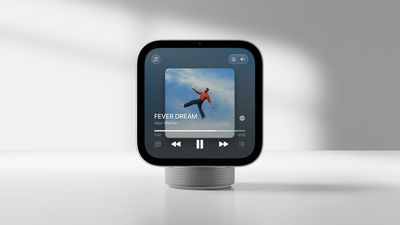
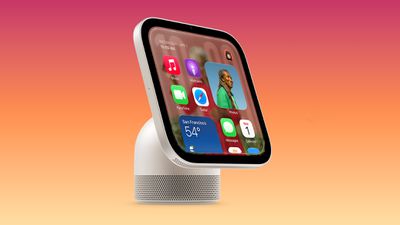
Even though Apple's all-new HomeView smart home display has several bugs, customers ordering the device now might face a long wait for delivery.
HomeView has been available to order since October 13, and deliveries to customers began on November 13. For orders placed today, though, the tabletop version of the HomeView has an estimated delivery timeframe of anywhere from December 16 to January 12 on Apple's online store in the U.S., depending on the color that you choose:
Silver: December 16 - December 23
Space Gray: December 16 - December 23
Starlight: December 23 - January 5
Rose Pink: January 5 - January 12
The wall-mounted HomeView is still available for next-day delivery.
As always, Apple's shipping estimates are based on a combination of supply and demand, and we do not know how much supply is available.
You might still be able to find a tabletop HomeView in person at Apple's retail stores or at select resellers, such as Best Buy.
In the U.S., both the tabletop and wall-mounted HomeView models are priced at $299. Apple sells mounts separately, with pricing starting at $59.95.
Apple is urging Canada to change a proposed law that it says could weaken the privacy and security protections built into its products.
The legislation, Bill C-22, is intended to help police and intelligence agencies obtain digital information during investigations. According to Bloomberg, Apple, Google, and Meta are lobbying for changes as Canadian senators review the bill.
At the center of the dispute is whether companies could be forced to change how their services work to help authorities access user data. The bill would allow the government to require companies to build tools for that purpose, with approval from Canada's Intelligence Commissioner.
It could also require certain providers to keep records about users' connections for up to six months. This metadata would exclude the contents of messages, browsing history, and social media activities.
Lawmakers have already added safeguards. For example, a company could only be required to unlock encrypted data if it supplied the encryption and already has the information needed to unlock it. The bill also says companies cannot be forced to introduce certain security weaknesses into their services.
Apple says those changes do not fully address its concerns. The company welcomed the government's revisions, but told Bloomberg that the bill would still undermine its ability to protect users' data. Apple previously warned that the legislation could let authorities demand backdoors.
Meta, Signal, and Tailscale representatives are scheduled to appear before a Senate committee today. The bill has not yet become law.
Note: This discussion thread is located in our Political News forum with special rules.
One of the best items to shop for every Black Friday season is a TV set, and this year is no different, with hundreds of deals on TVs across numerous retailers. Below we're highlighting some of the best TV deals you can find right now at Amazon, Sony, Samsung, and more.
Note: MacRumors is an affiliate partner with some of these vendors. When you click a link and make a purchase, we may receive a small payment, which helps us keep the site running.
This year some of the best deals can be found on Samsung's lineup of The Frame TVs, available on sale across Amazon, Best Buy, and Samsung's own website. You can get the 2026 65-inch The Frame TV for $999.99 ($500 off), as well as the 85-inch The Frame Pro for $2,999.99 ($1,000 off), both new low prices for Black Friday.
Amazon
Amazon's Black Friday TV deals are abundant, with most sales focusing on Smart Fire TV models with big discounts. You'll find brands like Insignia, Hisense, and Panasonic at solid low prices this season.
Samsung's discount across The Frame TV lineup is one of this Black Friday's best TV deals. You'll find as much as $1,000 off the latest 2026 models of The Frame and The Frame Pro, plus sales on Samsung's OLED/QLED sets.
You can find all the Apple Black Friday Deals currently available in our dedicated post. For everything else, we're keeping track of the season's best Apple-related deals in our Black Friday roundup, so be sure to check back throughout the month for an updated list of all the most notable discounts you'll find for Black Friday 2026.
Deals Newsletter
Interested in hearing more about the best deals you can find this holiday season? Sign up for our Deals Newsletter and we'll keep you updated so you don't miss the biggest deals of the season!
Adobe this week is offering first-time subscribers of the Adobe Creative Cloud Pro plan a 57 percent discount on the service. With this sale, you'll pay $29.99 per month for the plan, down from $69.99 per month, and this price will last through your first year.
Note: MacRumors is an affiliate partner with Adobe. When you click a link and make a purchase, we may receive a small payment, which helps us keep the site running.
You can also choose to pay for the entire year upfront at the price of $334.18 per year, down from $779.88 per year. After your first year ends, your subscription will automatically renew at the standard rate unless you change or cancel the subscription. This sale ends November 27.
When signing up for Creative Cloud Pro, you gain access to more than 20 creative apps, including Photoshop, Illustrator, Premiere Pro, Acrobat Pro, plus Adobe Firefly creative AI for images, video, and audio. You also get templates, cloud storage, and thousands of Adobe Fonts.
Adobe is also offering 55 percent off your first year of Creative Cloud Pro for teams, priced at $44.99 per month, down from $99.99 per month. Finally, students and teachers can get Creative Cloud Pro for $15.99 per month for their first year, down from $69.99 per month, a savings of 77 percent.
We're keeping track of the season's best Apple-related deals in our Black Friday roundup, so be sure to check back throughout the month for an updated list of all the most notable discounts you'll find for Black Friday 2026.
Deals Newsletter
Interested in hearing more about the best deals you can find this holiday season? Sign up for our Deals Newsletter and we'll keep you updated so you don't miss the biggest deals of the season!
Just days after the HomeView's launch, some owners are reporting problems with Siri, timers, and music playback on Apple's new smart home hub, based on multiple MacRumors forumthreads.
In the longest discussion, which now spans over one hundred posts, several people say their HomeView refuses to set timers or alarms, and instead claims that a software update is required – even though the device reports that it is up to date. In another thread, one poster said an AppleCare senior advisor told them other owners had reported the same problem, and that cold-rebooting their paired iPhone cleared it.
Other owners describe Siri taking minutes to respond or repeatedly announcing that it is "downloading Siri." Elsewhere, in two separatethreads, owners report music commands failing outright or being carried out on their iPhone instead of the HomeView, even when the device shows Siri listening on screen. That's not all, either. Some owners with multiple units say commands meant for one room play in another, for no apparent reason.
Let's not overstate the case, though. Not everyone is seeing problems with HomeView. Several people have reported their units working as expected, and some say that any issues cleared after rebooting the HomeView, their iPhone, or both.
Apple has already said a software update coming next month will fix a separate issue in which Siri AI claims not to have a camera and won't let recognized users unlock doors and garages by voice. Apple already released a software update that addresses several vulnerabilities, including issues with AirPlay, Messages, and Bluetooth.
However, those are other issues, and it remains to be seen whether said update will fix the timer and music problems described by several owners in the MacRumors forums. Let us know in the comments of your own experience with HomeView.
Apple has renewed its popular British spy drama "Slow Horses" for ninth and tenth seasons, extending its considerable lead as Apple TV's longest-running original series by season, according to Deadline.
Six seasons of Slow Horses have already been released, with seasons seven and eight already confirmed before the latest renewal. The order for seasons nine and ten extends its lead as the Apple TV original with the most seasons commissioned.
The commitment puts "Slow Horses" well ahead of other established Apple originals. "For All Mankind," which debuted when the service launched in 2019, will finish with season six.
"Slow Horses" has also maintained an exceptional critical reception, with all six seasons holding critics' scores of 95% or higher on Rotten Tomatoes. Seasons two and four have perfect 100% ratings, while the latest season holds 98%.
The news answers recent uncertainty about the show's future. Cast member Olivia Cooke had suggested just days earlier that season eight could mark its conclusion.
The television series is catching up with the book series it is based on that began 16 years ago. Author Mick Herron has published nine main "Slough House" novels since the first one debuted in 2010, with gaps of between one and three years between installments. The latest, "Clown Town," arrived in 2025, three years after "Bad Actors."
Those two books provide the material for seasons seven and eight, raising the possibility that seasons nine and ten could move beyond the published novels. Apple has not confirmed that direction, with a spokesperson telling Deadline that story details for the additional seasons would follow.
Produced by See-Saw Films, "Slow Horses" centers on an outpost of MI5 where agents are sent after damaging their professional reputations. Gary Oldman plays their boss, "Jackson Lamb," alongside a cast that includes Jack Lowden, Kristin Scott Thomas, Jonathan Pryce, and Cooke. The first six seasons are available to stream now on Apple TV.
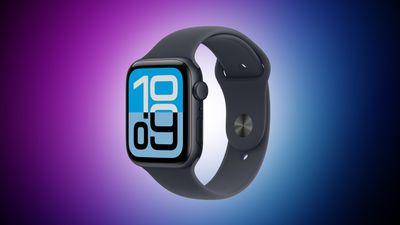
Following in the footsteps of this weekend's big discounts on the Apple Watch Series 12, Amazon today has all-time low prices across a number of Apple Watch SE 3 devices. Prices start at just $199.00 for the 40mm GPS Apple Watch SE 3, matching the previous record low price on this model and marking the first time we've tracked a discount on the SE 3 this Black Friday season.
Note: MacRumors is an affiliate partner with Amazon. When you click a link and make a purchase, we may receive a small payment, which helps us keep the site running.
The 44mm GPS SE 3 is priced at $229.00 in this sale, down from $279.00, another record low price. Similar to the Series 12 sale, Best Buy is matching all of these prices.
Anyone shopping for cellular models will find the 40mm GPS device priced at $249.00 and the 44mm GPS device priced at $279.00, both $50 discounts and another pair of all-time low prices.
If you're on the hunt for more discounts, be sure to visit our Apple Deals roundup where we recap the best Apple-related bargains of the past week.
Deals Newsletter
Interested in hearing more about the best deals you can find this holiday season? Sign up for our Deals Newsletter and we'll keep you updated so you don't miss the biggest deals of the season!
Apple has indirectly confirmed that iOS 27.3 beta 2 will be released today. The company informed The New York Times that it will be adding a video podcasts section to the Apple TV app for developers to test starting Monday, so the next developer betas of iOS 27.3, macOS 27.3, and so forth should be coming today.
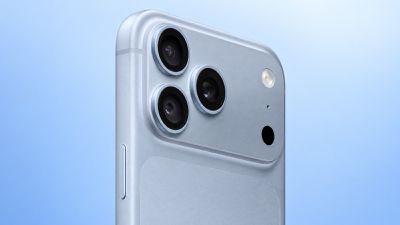
Next year's "iPhone 20 Pro" models will use the same glass design as the iPhone Air, but with more pronounced curvature along all four sides, according to the leaker known as "Fixed Focus Digital."
In a new post on Weibo, the leaker said the device would use the same glass material as the iPhone Air, adjusted to have greater curvature and produce a four-sided curved effect. The accompanying hashtag refers specifically to an "iPhone 20 Pro" with a four-sided curved, "all-glass" design.
An illustration shared with the post depicts rounded front and rear glass meeting a narrow, polished, gold-colored metallic frame. Physical side buttons, antenna lines, and a protruding rear camera assembly remain visible.
Taken together with earlier rumors and the post's accompanying illustration, the repeated comparisons suggest a design somewhere between the iPhone X and iPhone Air. The iPhone Air provides a reference for the slim profile and a more modern iPhone design, while the more pronounced glass curvature recalls the rounded edges of the iPhone X. Both feature a polished frame.
The latest claim builds on Fixed Focus Digital's previous report that Apple had modified iPhone Air manufacturing equipment to produce more rounded glass components for the 20th anniversary models. The leaker said the changes had helped reduce manufacturing costs, while substantially improving thinness and heat dissipation.
In a still-earlier report, the same leaker also claimed that a supply chain facility had completed renovations ahead of "iPhone 20" production, with manufacturing quality expected to be roughly comparable to the first-generation iPhone Air. The iPhone Air features Ceramic Shield 2 on the front and Ceramic Shield on the back.
The broader design picture aligns with Bloomberg's Mark Gurman's reporting that Apple's anniversary Pro models will feature glass that curves into the sides from both the front and rear, with a thin metal band between the two panels. Gurman has also described thinner display bezels and curved glass around all corners and edges, in what he expects to be the biggest overhaul of the Pro line since the iPhone X.
Apple's 20th-anniversary iPhone models are expected to launch in the fall of 2027. While leakers have variably referred to the device as the "iPhone 20 Pro," Apple's naming plans remain unclear. It seems plausible that the company could skip the iPhone 19 name to emphasize the anniversary, similar to its introduction of the iPhone X in 2017.
Next year's iPhone 20 Pro could feature a main camera sensor with logic circuitry manufactured using a new 17-nanometer process, according to Weibo-based leaker Ice Universe.
Modern stacked camera sensors separate their light-sensitive pixels from the logic circuitry responsible for reading out and processing image data. A more advanced manufacturing process for the logic layer could potentially enable faster readout speeds, improved power efficiency, and more sophisticated image processing.
The leaker provided no further details about the sensor, which would reportedly debut in Apple's 20th-anniversary iPhone in 2027. Apple is expected to skip the "iPhone 19" moniker next year, just like it did with the iPhone 9 prior to the release of the iPhone X in 2017 to celebrate the 10th anniversary of the original iPhone.
Interestingly, Samsung has already been developing a 17nm Low Power Value (17LPV) process specifically for CMOS image sensor signal processing circuitry, according to a 2024 Omdia report.
Apple is also working with Samsung to produce advanced image sensors at its Austin, Texas facility. Previous reports suggest the partnership involves a three-layer stacked sensor design, but there's currently no clear link between that project and the claimed 17nm component.
Separately, Apple is rumored to be developing its own image sensor incorporating LOFIC technology, which could substantially improve dynamic range and preserve more detail in highlights and shadows. Again though, it's not clear whether the latest claim relates to that sensor.
Apple is rumoured to be a developing a radical new design for its second commemorative iPhone, featuring a new quad-curved OLED display that wraps around the edges of the device, and a screen with potentially no cutouts at all. Apple is expected to debut the device in or around September 2027.



 Apple's marketing chief Greg Joswiak today



 Note: MacRumors is an affiliate partner with some of these vendors. When you click a link and make a purchase, we may receive a small payment, which helps us keep the site running.
 Note: MacRumors is an affiliate partner with Adobe. When you click a link and make a purchase, we may receive a small payment, which helps us keep the site running.

 Note: MacRumors is an affiliate partner with Amazon. When you click a link and make a purchase, we may receive a small payment, which helps us keep the site running.