Apple Considered Adding a Camera to the HomePod Years Ago
Apple considered launching a HomePod with a camera and additional sensors years before the upcoming "HomePad" device, Bloomberg's Mark Gurman reports.
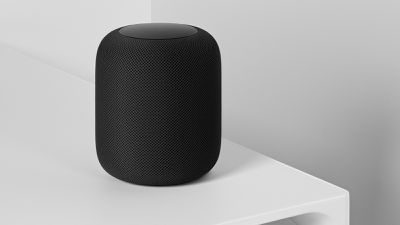
In a detailed profile of Apple's hardware engineering chief John Ternus, Gurman revealed that Apple considered adding a camera and a more advanced array of sensors to the original HomePod, which was announced in 2017. Ternus apparently believed that the additional capabilities would push up development costs and decided to cancel the features as a result.
Ternus was said to be reluctant to invest deeply in smart home devices when the first leading products from Amazon and Google arrived on the market around a decade ago. He subsequently took "some responsibility" for Apple falling behind in the smart home category.
Now, Ternus is leading Apple's efforts to re-establish itself in the smart home market with three new products, including an AI-powered smart home hub with facial recognition (J490), a small sensor for managing home security (J450), and a robotic device (J595). The smart home hub, dubbed "HomePad" in some reports, is expected to launch in the fall of 2026.
Popular Stories
Bloomberg's Mark Gurman today said Apple has four goals for future iPhone Duo models: Face ID, an Action button, a telephoto camera, and a thinner-and-lighter design. Gurman said Apple has already developed iPhone Duo 2 prototypes with Face ID on the outer display, but it is "running out of time" to finalize the feature for that model, so it might not arrive until the iPhone Duo...
Apple plans to unveil an iPhone 18e, iPhone 18, updated entry-level iPad, and new MacBook Neo and MacBook Air models around February or March next year, according to the latest word from Bloomberg's Mark Gurman.
In his Power On newsletter today, Gurman said Apple has some additional products planned for the first half of 2027, including the iPhone Air 2 and new iPad Air and iPad Pro models,...
Apple has made a change to its development process for iOS 28, macOS 28, and corresponding software updates, according to Bloomberg's Mark Gurman.
In his Power On newsletter today, he said Apple separates development of each year's new operating systems into three major stages. Typically, he said each stage consists of four weeks of coding followed by a four-week "convergence" period where...