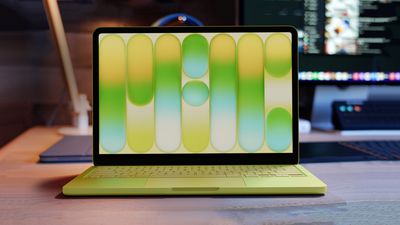
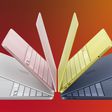
A second-generation MacBook Neo with a touch screen has gone from a yes to a maybe to a no, according to rumors.
In his Power On newsletter today, Bloomberg's Mark Gurman said Apple has yet to decide whether to bring touch-screen support to any Macs beyond the next high-end MacBook Pro, which is expected to be released in late 2026 or early 2027.
A touch screen would slightly increase the cost of making the MacBook Neo, which is priced as low as $499, so the laptop will likely remain without one for years.
In September 2025, Apple analyst Ming-Chi Kuo said the second-generation MacBook Neo "could" include touch support, but last week he said it "may" not happen after all, and now Gurman has completely ruled out the possibility for now.
"I'd be shocked if a touch screen comes to the Neo in the next three years," said Gurman.
Nevertheless, a second-generation MacBook Neo will likely be released next year, according to Kuo. The key upgrade should be the A19 Pro chip with an increased 12GB of RAM, up from the A18 Pro chip with 8GB of RAM in the current model.
Sunday November 15, 2026 8:42 am PST by Joe Rossignol
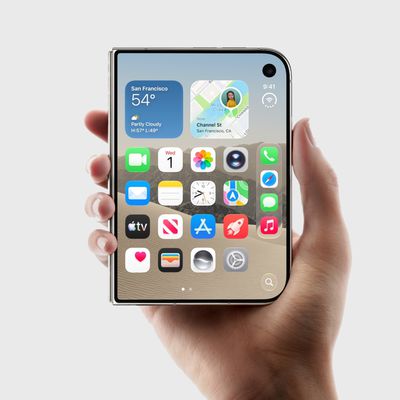
Bloomberg's Mark Gurman today said Apple has four goals for future iPhone Duo models: Face ID, an Action button, a telephoto camera, and a thinner-and-lighter design. Gurman said Apple has already developed iPhone Duo 2 prototypes with Face ID on the outer display, but it is "running out of time" to finalize the feature for that model, so it might not arrive until the iPhone Duo...
Sunday November 22, 2026 7:32 am PST by Joe Rossignol
Apple plans to unveil an iPhone 18e, iPhone 18, updated entry-level iPad, and new MacBook Neo and MacBook Air models around February or March next year, according to the latest word from Bloomberg's Mark Gurman.
In his Power On newsletter today, Gurman said Apple has some additional products planned for the first half of 2027, including the iPhone Air 2 and new iPad Air and iPad Pro models,...
Sunday November 8, 2026 7:42 am PST by Joe Rossignol
Apple has made a change to its development process for iOS 28, macOS 28, and corresponding software updates, according to Bloomberg's Mark Gurman.
In his Power On newsletter today, he said Apple separates development of each year's new operating systems into three major stages. Typically, he said each stage consists of four weeks of coding followed by a four-week "convergence" period where...
After decades of availability on windows machines I still do not understand why I’d ever want a touch screen laptop. Like maybe some sort of convertible that could act like a pure tablet as long as the transition was seamless and the device light weight but reaching out to touch the screen when I have more ergonomic access to the keyboard and touxhpad? Why?
The touch screen rumor cycle around the Neo is probably missing the point.
People tend to frame this as a philosophical question to whether Apple is finally willing to admit that touch belongs on the Mac. But the Neo isn’t really a philosophical product. It’s a cost engineered one.
The entire reason the Neo exists at $499–$599 is that Apple is reusing a huge amount of the iPhone silicon ecosystem and keeping the hardware extremely simple. Once you understand that, the touch question becomes much less mysterious.
Adding touch isn’t just “one extra feature.” It means a different display assembly. Higher cost and higher complexity.
And the Neo doesn’t actually need touch to succeed in the segment Apple is targeting.
The machine isn’t competing with iPads. It’s competing with the low end Windows and Chromebook laptops that dominate the $400–$700 retail band. In that market, the differentiator Apple is introducing isn’t touch, it’s Apple Silicon efficiency, build quality, and the macOS ecosystem at a price point where Macs historically didn’t exist.
So the real question isn’t “why doesn’t the Neo have touch?”
The real question is: What problem would touch solve for this product that Apple currently needs solved?
Until there’s a clear answer to that, the simplest explanation is that Apple will keep the Neo exactly as it is, cheap, simple, and strategically disruptive to the bottom end of the laptop market.
Touch screens make much more sense on higher margin Macs where Apple can absorb the cost without undermining the whole point of the machine.
Isnt this obvious? Why would Apple give a feature to entry level product but not available in upper tier products (unless entire mac lineup would have touch screen feature in next iteration)
This device is using binned leftover chips from the 16 Pro with 1 less GPU core. The SoC was basically free, which is what keeps the price of this laptop down. They won’t switch to a touchscreen until they have so many stocked in a warehouse collecting dust that it is cheaper to use them than to shop for something else.