iPad 11 With A17 Pro Chip and Apple Intelligence Rumor Was Wrong
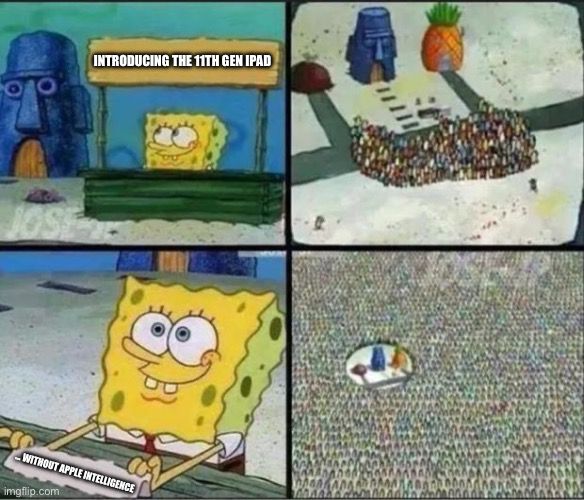
Apple today updated the entry-level iPad with an A16 chip. Unfortunately, however, the device continues to lack support for Apple Intelligence.

Apple Intelligence is not available on the new entry-level iPad, according to Apple's tech specs.
In January, Bloomberg's Mark Gurman said the new entry-level iPad would be equipped with an A17 Pro chip, enabling Apple Intelligence on the device:
The new entry-level iPads — J481 and J482 — will get faster processors and Apple Intelligence. The current models have the A14 chip and 4 gigabytes of memory. Look for the new versions to have the A17 Pro chip, matching the iPad mini, and a bump to 8 gigabytes of memory. That’s the minimum needed to support the new AI platform.
This rumor proved to be wrong.
A private account on X with a proven track record ended up being correct about the entry-level iPad getting an A16 chip instead.
The entry-level iPad remains the only iPad model in Apple's current lineup that lacks support for Apple Intelligence. The features are available on any iPad Pro or iPad Air model with the M1 chip or newer, as well as the latest iPad mini with the A17 Pro chip.
Popular Stories
Bloomberg's Mark Gurman today said Apple has four goals for future iPhone Duo models: Face ID, an Action button, a telephoto camera, and a thinner-and-lighter design. Gurman said Apple has already developed iPhone Duo 2 prototypes with Face ID on the outer display, but it is "running out of time" to finalize the feature for that model, so it might not arrive until the iPhone Duo...
Apple plans to unveil an iPhone 18e, iPhone 18, updated entry-level iPad, and new MacBook Neo and MacBook Air models around February or March next year, according to the latest word from Bloomberg's Mark Gurman.
In his Power On newsletter today, Gurman said Apple has some additional products planned for the first half of 2027, including the iPhone Air 2 and new iPad Air and iPad Pro models,...
Apple has made a change to its development process for iOS 28, macOS 28, and corresponding software updates, according to Bloomberg's Mark Gurman.
In his Power On newsletter today, he said Apple separates development of each year's new operating systems into three major stages. Typically, he said each stage consists of four weeks of coding followed by a four-week "convergence" period where...