Apple 'Not' Working on New AirPort, But Apple TV and HomePod Provide Glimmer of Hope
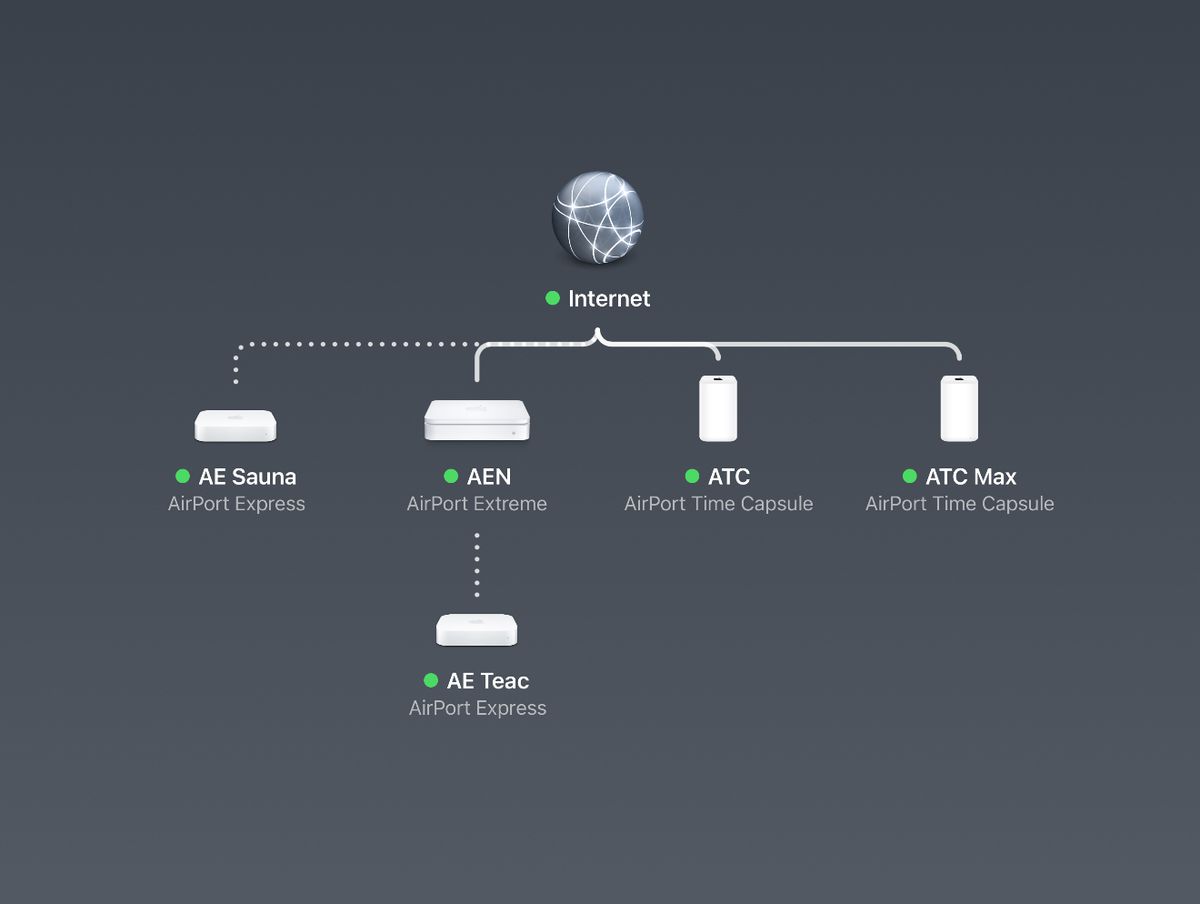
Bloomberg's Mark Gurman recently reported that Apple is developing its own Wi-Fi and Bluetooth chip that will debut in new Apple TV and HomePod mini models next year. The report led to hopes that Apple might also use the chip to revive its line of AirPort routers, which were discontinued in 2018, but those dreams have been dashed by Gurman himself.

In his Power On newsletter today, the well-connected journalist said that Apple is "not" currently working on new AirPort routers.
Gurman did offer a glimmer of hope. He said that Apple's in-house Wi-Fi chip is "so sophisticated" that it could "theoretically" turn a home device like a future Apple TV or HomePod into a wireless access point. However, he did not confirm if Apple will actually follow through with that idea, so keep your expectations low for the time being.
Apple's in-house Wi-Fi chip could still have other benefits for the next Apple TV and HomePod mini models, including Wi-Fi 6E support.
Popular Stories
Bloomberg's Mark Gurman today said Apple has four goals for future iPhone Duo models: Face ID, an Action button, a telephoto camera, and a thinner-and-lighter design. Gurman said Apple has already developed iPhone Duo 2 prototypes with Face ID on the outer display, but it is "running out of time" to finalize the feature for that model, so it might not arrive until the iPhone Duo...
Apple plans to unveil an iPhone 18e, iPhone 18, updated entry-level iPad, and new MacBook Neo and MacBook Air models around February or March next year, according to the latest word from Bloomberg's Mark Gurman.
In his Power On newsletter today, Gurman said Apple has some additional products planned for the first half of 2027, including the iPhone Air 2 and new iPad Air and iPad Pro models,...
Apple has made a change to its development process for iOS 28, macOS 28, and corresponding software updates, according to Bloomberg's Mark Gurman.
In his Power On newsletter today, he said Apple separates development of each year's new operating systems into three major stages. Typically, he said each stage consists of four weeks of coding followed by a four-week "convergence" period where...