Apple Silicon Mac Pro Said to Feature Same Design as 2019 Model, No User-Upgradable RAM
The upcoming high-end Apple silicon Mac Pro will feature the same design as the 2019 model, with no user-upgradeable RAM given the all-on-chip architecture of Apple silicon.
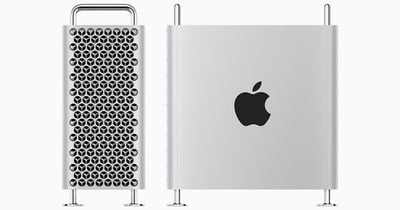
In his latest Power On newsletter, Bloomberg's Mark Gurman has revealed that Apple's upcoming Mac Pro, which is the final product to make the transition to Apple silicon, will feature the same design as the current Mac Pro from 2019. Unlike the current Intel-based Mac Pro, the upcoming model will also not feature user-upgradeable RAM.
In another disappointment, the new Mac Pro will look identical to the 2019 model. It will also lack one key feature from the Intel version: user-upgradeable RAM. That's because the memory is tied directly to the M2 Ultra's motherboard. Still, there are two SSD storage slots and [spaces] for graphics, media, and networking cards.
Gurman has reported that Apple has canceled plans to release a higher-end model of the upcoming Mac Pro with 48 CPU cores and 152 GPU cores given its high cost and likely niche market.
Popular Stories
Bloomberg's Mark Gurman today said Apple has four goals for future iPhone Duo models: Face ID, an Action button, a telephoto camera, and a thinner-and-lighter design. Gurman said Apple has already developed iPhone Duo 2 prototypes with Face ID on the outer display, but it is "running out of time" to finalize the feature for that model, so it might not arrive until the iPhone Duo...
Apple plans to unveil an iPhone 18e, iPhone 18, updated entry-level iPad, and new MacBook Neo and MacBook Air models around February or March next year, according to the latest word from Bloomberg's Mark Gurman.
In his Power On newsletter today, Gurman said Apple has some additional products planned for the first half of 2027, including the iPhone Air 2 and new iPad Air and iPad Pro models,...
Apple has made a change to its development process for iOS 28, macOS 28, and corresponding software updates, according to Bloomberg's Mark Gurman.
In his Power On newsletter today, he said Apple separates development of each year's new operating systems into three major stages. Typically, he said each stage consists of four weeks of coding followed by a four-week "convergence" period where...