Skip to Content

Apple to Expand Support for Passwordless Sign-Ins Across Websites and Apps

Apple, Google, and Microsoft today announced plans to expand support for a passwordless sign-in standard created by the FIDO Alliance and the World Wide Web Consortium (W3C), promising a faster, easier, and more secure sign‑in process.
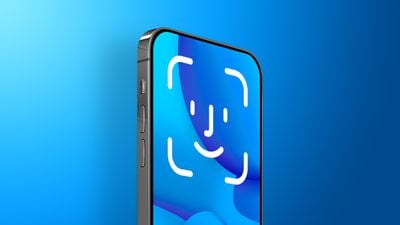
Beyond iPhone 13 Better Blue Face ID
The expanded standards-based capabilities will give websites and apps the ability to offer an end-to-end passwordless sign-in option, according to the announcement. Instead of entering a password, users will sign in through the same action that they take multiple times each day to unlock their devices, such as Face ID on the iPhone.

The new approach is described as "radically more secure" compared to passwords and legacy multi-factor technologies, such as one-time passcodes sent over SMS.

Apple, Google, and Microsoft already support FIDO Alliance standards across their platforms, but expanded support will give users two new capabilities for more seamless and secure passwordless sign-ins, as outlined in the announcement:

1. Allow users to automatically access their FIDO sign-in credentials (referred to by some as a "passkey") on many of their devices, even new ones, without having to reenroll every account.
2. Enable users to use FIDO authentication on their mobile device to sign in to an app or website on a nearby device, regardless of the OS platform or browser they are running.

These new capabilities are expected to become available across Apple, Google, and Microsoft platforms over the coming year, the announcement said.

"Working with the industry to establish new, more secure sign-in methods that offer better protection and eliminate the vulnerabilities of passwords is central to our commitment to building products that offer maximum security and a transparent user experience — all with the goal of keeping users' personal information safe," said Kurt Knight, Apple's Senior Director of Platform Product Marketing, in a press release.

Popular Stories

apple design award 2025

Apple Announces 2025 Design Award Winners Ahead of WWDC 2025

Tuesday June 3, 2025 10:14 am PDT by
As we wait for WWDC to kick off next Monday, Apple today announced the winners of its annual Apple Design Awards, recognizing apps and games for their innovation, ingenuity, and technical achievement. The 2025 Apple Design Award winners are listed below, with one app and one game selected per category: Delight and Fun - CapWords (App) and Balatro (Game) Innovation - Play (App) and PBJ -...
1password deal blue

1Password Security Breach: What Was Accessed and What Wasn't

Wednesday November 25, 2026 1:09 pm PST by
Popular password management app 1Password today said it experienced a security breach earlier this month. 1Password says some customer names and email addresses were accessed, but no customer vault contents were compromised. On November 19, 1Password saw indications that an employee's GitHub account had been breached and began investigating. The company says the breached GitHub account was...
Apple 2026 Black Friday Event Hero

Apple's Official 2026 Black Friday Offer Starts Rolling Out

Thursday November 26, 2026 8:37 am PST by
Apple's annual four-day Black Friday through Cyber Monday shopping event is now live in Australia, New Zealand, and Thailand, and it will continue to roll out across Europe, the U.S., and Canada as the calendar turns to Friday, November 27 around the world. In the U.S., Apple's terms and conditions say the promotion begins on November 27 at 12 a.m. Pacific Time and ends on November 30 at...

Top Rated Comments

60 months ago

Can someone explain the security of this? Obviously I doubt that my facial data would be shared with the website, but how does it remain secure?

Would website devs need to drastically change how they code websites or would the phone handle the translation between the website asking for a password and the user just being able to scan their face?
Sure! This happens to be an area of interest for me.

The root of this technology is public-key cryptography. With PKC, there are always two related keys: A private key, and a public key. The public key is easily derived from the private key, but the private key cannot be derived from the public key. The public key can decrypt anything encrypted by the private key and vice-versa, but they cannot decrypt things they themselves encrypt without the other key.

When you are signing up, your local device generates the keys, sends the public key to the service you are accessing (this is effectively your "password", but much more secure), and stores the private key in secure storage (so on an iPhone, the Secure Enclave).

In the future, when you log in, the website sends a challenge, which is just a random string of bytes. You unlock the private key on your local device (for iPhone, using biometrics), and sign the challenge locally. A digital signature is a cryptographic hash of the contents of the message being signed (in this case, the server challenge), which is then encrypted with your private key. When you send the signed challenge back to the server, it uses the public key to decrypt the signature (thus verifying it was you that signed the challenge) and then verifies that the hash of the challenge is correct (thus verifying you signed what the server sent and not some other string of bytes). Since the signature both verifies that 1) your private key is the one that created the signature and 2) the challenge the server sent is the one that was signed, you are securely authenticated without needing to send your secret to the server.

Pretty cool, huh?

Edit: answering the other question: Yes, there are some changes that need to be made to websites to handle this. They need to be able to store the public keys, and they need to be able to handle the challenge and response. The WebAuthn standard handles this for websites, and there are a lot of drop-in libraries for just about any web application stack now.
Score: 41 Votes (Like | Disagree)
kiranmk2 Avatar
60 months ago
Hope this works - even using a password manager is more hassle than it needs to be. The use of biometrics will hopefully also remove the need for 2FA codes.
Score: 17 Votes (Like | Disagree)
zorinlynx Avatar
60 months ago
My main concern with "passwordless" logins is authentication from "first principles".

If you don't have any of your own devices, and want to log into your accounts from a brand new, unknown device, what do you do? I have a couple of critical passwords memorized so that I can get into my stuff if I lose all my devices. These companies seem intent on eliminating all passwords, but at some point you have to have a way to log in if you're starting from scratch.

Conversely, if they do have a mechanism for logging in from scratch, how do they secure it so a bad actor can't pretend to be you logging in from scratch?
Score: 15 Votes (Like | Disagree)
60 months ago
I have relatives who are very vocal about how much they hate [remembering] passwords. I think this would be a welcome convenience for many people if it works as advertised.
Score: 9 Votes (Like | Disagree)
60 months ago
For those asking how this works, here's a simplified explanation based on my understanding from reading and watching the online resources about it.

To register on a new site, say widget.com
[LIST=1]
* You go widget.com and navigate to its new-account creation page
* Type in what you want your username to be and then click "create account"
* Your phone will bring up a system sheet confirming you want to create a credential for widget.com. After you confirm, the phone will create a site-specific credential token (called "passkey" in FIDO parlance), the security of which is based on public-key encryption.
* The phone will store the token and private-key portion of the token on your iCloud Keychain. It will share the public-key portion of the token with widget.com so it can save it on their server.

Whenever you visit widget.com in the future, Safari will know you have a saved credential for the site and will confirm you'd like to login, similar to how it works today for traditional passwords saved in your keychain, including you proving you have rightful access to your keychain (Face ID, passkey, etc...). But instead of a password, Safari will present the passkey (token) to the site (which it already has stored on their server to compare), then verify you're the rightful owner of the token by proving to the site that your phone has the private key associated with the token (challenge/response).
Score: 7 Votes (Like | Disagree)
60 months ago

As a developer, what do I need to do to support this? How does this actually work?

Based on reading Apple's full press release, it sounds to me like this is just:
1 - Your device automatically generates a password when an account is created, the same as Safari can already do.
2 - Your device automatically fills in the password when it's requested, the same as all browsers can already do.
3 - Your devices will automatically sync these passwords with each other, possibly with more interoperability between brands, so, ie, Windows and Linux and Mac and iOS and Android will all implement the same standards so everything will be more seamless when mixing different types of devices together.
4 - The automatic password stuff is all handled in the background, without any UI needing to be involved, so the end user won't ever see a text field that gets populated automatically for them. So from the perspective of a web developer, not much will change. IDK - will this just make it so that input fields of type password and type hidden are rendered the exact same (which is to say, not at all?)
Except it's not passwords, it's public-key cryptography.

If you're running a service, you need to set up the service to handle WebAuthn, or whatever this extended standard will be called.

If you're building a client, you'll need to implement whatever APIs are necessary to do the client-side portion of the authentication. This is what the FIDO standard covers, but again, not sure what the APIs will look like outside of the web browser (again, WebAuthn).

So no, it's not zero-effort, but it is infinitely more secure than either passwords or TOTP (numeric one-time passwords) because the secret never leaves the device. In this scheme, the server only needs the public key, which is not the secret.
Score: 7 Votes (Like | Disagree)
Latest Stories
The 50+ Best Apple Black Friday Deals Still Available on AirPods, iPads, and More
11 hours ago
HomePod Mini 2 in (RED) Seemingly Spotted Ahead of Announcement
8 hours ago
Apple's M6 and PROLED MacBook Pro Reach New Low Prices for Black Friday
18 hours ago
The MacRumors Show: iPhone Air 2 and iPhone 18 Are Coming
18 hours ago
Apple Store in Brisbane Reopening Next Month With New Design
19 hours ago
The 60+ Best Black Friday Accessory Deals on iPhone Chargers, TVs, Headphones, and More
20 hours ago
GTA VI Now (Barely) Running on Apple Silicon Macs
20 hours ago
The Best Black Friday Streaming Deals on Apple TV, Disney+, and More
21 hours ago
Apple TV's 'Carême' Wins International Emmy for Best Drama
21 hours ago
iPhone 18 Production Delay Leaves Apple Little Time Before Launch
22 hours ago
The Best Black Friday AirPods Deals Still Available
14 hours ago
The Best Black Friday Deals on Apple Home Products
23 hours ago
The Best Black Friday iPhone Deals Still Available
14 hours ago
The Best Black Friday iPad Deals Still Available
14 hours ago
The Best Black Friday Apple Watch Deals Still Available
14 hours ago
The Best Black Friday AirTag Deals Still Available
14 hours ago
The Best Black Friday Mac Deals Still Available
14 hours ago
iPhone Share of US Smartphone Market Hits 57% as Rivals Slip
1 day ago
iPhone 20 Pro Rumored to Feature 3D-Printed Titanium Frame
1 day ago
Apple's Official 2026 Black Friday Offer Starts Rolling Out
2 days ago
Halide Adds Fill Light Feature for iPhone Duo
2 days ago
MacBook Air Black Friday Deals Now Live With Massive $399 Savings
2 days ago
Amazon Discounts All MacBook Neo Models by $99 for Black Friday
2 days ago
Kodak Launches Unique AirTag Rival With E-Ink Display
2 days ago
Here's Why the Apple Store is Going Down
2 days ago
Apple Still Working on Giant Foldable iPad That Could Cost $5,000
2 days ago
iPhones Dominate China's Weak Singles' Day Smartphone Sales
2 days ago
iPhone 20 Pro Could Feature Ceramic in Limited-Edition Model
2 days ago
Apple Faces Korean Regulator Review Over iPhone 16 AI Advertising
2 days ago
Apple Watch Ultra 4 Hits New Best-Ever Price of $649.99 for Black Friday
2 days ago
Related Apple News: South Africa | Travel | Ipad | World News | Health