M1 MacBook Pro Replaces Low-End Model, Higher-End Intel Options Still Available
The new 13-inch MacBook Pro with an M1 chip replaces the lower-end MacBook Pro models that were previously available, and Apple is continuing to sell it right alongside higher-end models that continue to feature Intel chips.
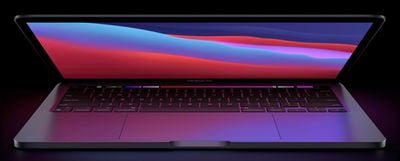
Apple introduced the Intel-equipped MacBook Pro models in May 2020. They're available for $1,799 and $1,999 alongside the $1,299 and $1,499 M1 MacBook Pro models.
Because the M1 MacBook Pro models are replacing the lower-end models, it's worth noting that the machines have just two USB-C ports that offer Thunderbolt 3 and USB 4, while the higher-end models have four ports.
The Mac mini models with M1 chips, priced at $699 and $899 depending on storage, are also being sold alongside an older Intel-equipped Mac mini model. The MacBook Air models, however, use M1 chips across the board and Apple no longer offers a MacBook Air with an Intel chip.
Despite the transition to Apple Silicon, Apple plans to continue to support Intel chips for years to come. Apps built using the new Universal App binary will be able to run on both Apple Silicon and Intel Macs going forward.
Popular Stories
Apple plans to unveil an iPhone 18e, iPhone 18, updated entry-level iPad, and new MacBook Neo and MacBook Air models around February or March next year, according to the latest word from Bloomberg's Mark Gurman.
In his Power On newsletter today, Gurman said Apple has some additional products planned for the first half of 2027, including the iPhone Air 2 and new iPad Air and iPad Pro models,...
A MacBook Air with a new look could launch in late 2027 or 2028, Bloomberg's Mark Gurman said in the latest episode of his Power On podcast. Apple plans to refresh the MacBook Air with M6 chips in early 2027 alongside the MacBook Neo 2, but that update won't include a new design.
A more extensive overhaul could follow later in 2027 or in 2028, and the MacBook Air could get an OLED display at ...
LG Display is developing a new way to make OLED screens with higher brightness, longer lifespans, and lower power consumption for future Macs, according to The Elec.
The technology, called "FLiPP," is reportedly being developed for potential use in Apple's MacBook Air and iMac in 2030. LG unveiled it in August, but the latest report identifies the Apple products it could eventually reach.
...