In the U.S., Apple Arcade costs $6.99 per month on its own. Alternatively, the service is included with any Apple One bundle subscription. Every game available on Apple Arcade is free of ads and in-app purchases.
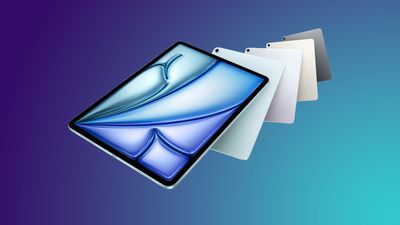
Apple is expected to replace the LCD screens in both sizes of the iPad Air with OLED displays in the first half of 2027, according to DigiTimes.
An OLED iPad Air has been rumored for over a year. Bloomberg's Mark Gurmanreported in October 2025 that Apple was developing one and that it was unlikely to arrive before 2027. He narrowed that window to the first half of 2027 earlier this month. The latest report adds shipment estimates and details on how panel orders could be split.
Samsung Display is expected to supply most iPad Air panels. BOE is seeking orders for one of the two sizes and still needs to qualify as a supplier. With orders for the iPad Air and iPad mini, Samsung could become Apple's largest supplier of OLED iPad panels overall, while LG Display is expected to retain the lead for the iPad Pro.
Industry estimates cited by DigiTimes put 2027 shipments at 4 million to 5 million units each for the iPad Air and iPad mini, and 3 million to 4 million for the iPad Pro. The iPad Air and iPad Pro estimates each cover both screen sizes. The iPad Pro forecast is well below its reported pre-launch target of around 10 million units per year, with industry sources pointing to the price as a factor in weaker demand.
Both sizes of the current M4 iPad Air use LCD screens. The move to OLED would make the iPad Air Apple's third iPad line to adopt the technology, following the iPad Pro in 2024 and the 8.5-inch iPad mini that went on sale November 6.
According to DigiTimes, the iPad Air is expected to use the same single-stack OLED design and low-temperature polycrystalline silicon (LTPS) backplane as the iPad mini. The iPad Pro uses two light-emitting stacks to boost brightness and reportedly uses a low-temperature polycrystalline oxide (LTPO) backplane.
LTPO's oxide transistors help pixels hold their charge longer between refreshes, so the display can save power by refreshing less often when the image is still. The iPad Pro's ProMotion display can vary its refresh rate from 10Hz to 120Hz. DigiTimespreviously reported that the OLED iPad Air would stick with 60Hz, leaving ProMotion exclusive to the iPad Pro in Apple's tablet lineup.
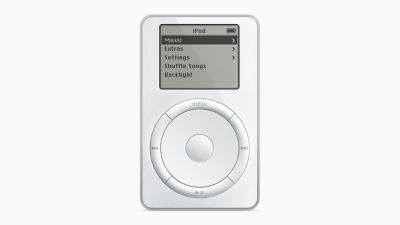
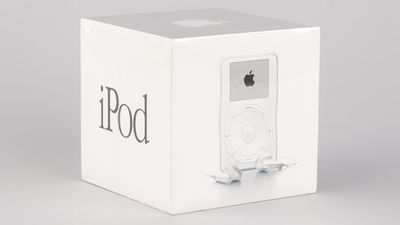
Apple's original iPod went on sale 25 years ago today, on November 10, 2001. The $399 music player initially worked only with a Mac, but it went on to become one of Apple's most significant products and helped the company expand beyond the computer business.
Steve Jobs had unveiled the first iPod just over two weeks earlier, on October 23, at a small press event in the Town Hall auditorium at Apple's Infinite Loop headquarters. Advertised as offering "1,000 songs in your pocket," the device combined a 5GB hard drive with a monochrome LCD display, a mechanical scroll wheel, and up to 10 hours of battery life.
The original model required iTunes. Its FireWire connection transferred music and charged the battery, while automatic synchronization copied songs and playlists from the user's iTunes library. Apple said that an entire CD could be transferred in under 10 seconds and a collection of 1,000 songs in less than 10 minutes. The hard drive could also store documents and other files.
Ahead of the announcement, Apple invited the press to the unveiling of a "breakthrough digital device," specifying that it was not a Mac. Reports variously suggested a music player, a home stereo accessory, or a handheld device with handwriting recognition. A MacRumorsrumor roundup published two days before the event included the name "iPod."
The announcement received a mixed response. Our original coverage is still available, along with reader comments questioning the device's price, Mac-only compatibility, and significance. One reader described it as "far from revolutionary," while another wrote, "all this hype for something so ridiculous!" Early forum discussions also covered fingerprints on the polished rear enclosure, heat while charging, and the sound quality of the included earbuds.
Hardware revisions followed in quick succession. The second-generation iPod adopted a touch-sensitive scroll wheel, while the third-generation model introduced the 30-pin Dock Connector in 2003. The full-size iPod gained a color display in 2004 and video playback in 2005.
The iPod mini was announced in January 2004, representing the first extension of the product line. It featured a smaller anodized aluminum enclosure in silver, gold, pink, blue, or green, and introduced the Click Wheel, which integrated playback buttons into the touch-sensitive scrolling surface. Apple adopted the same control for the fourth-generation full-size iPod later that year.
In 2005, Apple introduced both the iPod shuffle and iPod nano. The shuffle omitted a display and offered a smaller, simpler music player, while the nano replaced the mini with a thin design based on flash storage. Later iPod nano models added video playback, a video camera, and a touchscreen. The square sixth-generation model, introduced in 2010, could be worn on the wrist using third-party watch straps.
By April 2007, Apple had sold 100 million iPods, less than six years after the first model reached customers. By October 2011, sales had exceeded 304 million units.
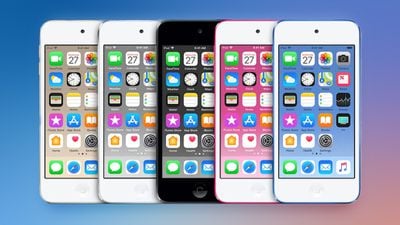
The iPod touch arrived in September 2007, several months after the first iPhone went on sale. It featured a 3.5-inch Multi-Touch display, Wi-Fi, and Safari, without requiring a cellular plan.
The seventh-generation iPod touch received an A10 Fusion chip and up to 256GB of storage in May 2019. It remained on sale without further hardware updates until May 10, 2022, when Apple announced its discontinuation and said it would be available while supplies lasted.
In its announcement, Apple attributed the end of the lineup to the integration of music playback across its other products. Greg Joswiak, Apple's senior vice president of worldwide marketing, said that "the spirit of iPod lives on" through devices including the iPhone, Apple Watch, HomePod mini, Mac, iPad, and Apple TV.
Apple may be working on a way for Maps arrival estimates that account for parking as well as the walk to your destination, according to findings shared by code explorer pdfu. A new "TimeToPark" flag in the iOS 27.3 beta apparently allows the system to measure time spent near a destination before parking, plus walking time afterwards.
The measurements use background location and motion data, with results saved per trip and grouped by weekday and hour. However, pdfu says the feature can only be enabled on internal installations, and no Maps feature uses the data yet. In other words, watch this space – parking-aware ETAs could yet become a thing.
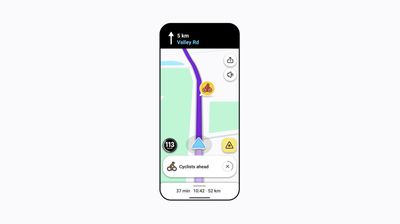
Waze and Garmin have announced the launch of real-time cycling alerts for drivers to help create a safer environment on the road.
Going forward, when cyclists turn on Garmin LiveTrack on their Garmin Edge bike computer or Garmin smartwatch, they can choose to show up in Waze as a real-time moving icon.
Drivers will also see a notification when a cyclist is nearby, so they can slow down, stay aware, and share the road.
The feature is completely opt-in, and Waze and Garmin say it is designed with privacy in mind. Drivers only see a temporary alert that a cyclist is nearby, and a cyclist's name, identity, or exact route is never shared in the app. Alerts also automatically turn off the moment a cyclist ends their ride on the Garmin device.
Cycling alerts powered by Garmin LiveTrack are rolling out now globally to Waze on iOS and Android.
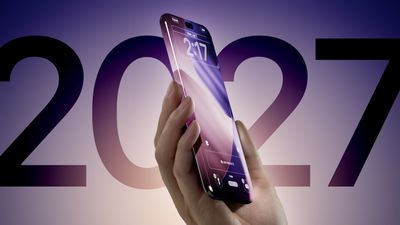
In 2017, Apple celebrated the iPhone's 10th birthday with the iPhone X, the biggest redesign in the product's history. For the device's 20th anniversary, all the rumors indicate that the company is preparing another landmark redesign.
The commemorative "iPhone 20" model isn't expected until September 2027, but leaks have been piling up for months. According to Bloomberg's Mark Gurman, Apple is already deep into its development, and the picture forming across multiple reports is of an iPhone that looks like a single, uninterrupted slab of glass. Here's what we're expecting:
A quad-curved, all-glass design: The display glass reportedly curves away on all four sides, concealing the metal frame during normal use. Apple is said to be working with Samsung on an "equal-depth quad-curved" display to achieve the effect.
Advanced OLED technology: Apple was reportedly planning a brighter, thinner Samsung OLED panel using Color Filter on Encapsulation (COE) for the anniversary iPhone, but a more recent report suggests the technology has slipped: UBI Research does not expect COE on Apple's Pro iPhones until 2029, casting doubt on its inclusion in the 2027 model.
Under-display Face ID and camera: Apple is reportedly continuing to test hardware that would eliminate the final visible cutout from the front of the device. Apple already debuted an under-display camera on the iPhone Duo's inner screen, but reviewers criticized its image quality. Whether an improved version will be ready for the iPhone 20's rumored fall 2027 launch remains uncertain.
Solid-state buttons: Apple is said to be testing haptic replacements for the Side, Volume, Action, and Camera Control buttons. The buttons could be integrated directly into the device's frame, with no actual physical movement when pressed, yet retaining a tactile responsiveness.
Apple modem in the United States: Apple is developing modems that it hopes will outperform Qualcomm's on speed and AI functionality; its third-generation modem, due in 2027, is the one expected to finally exceed Qualcomm's. The C1 and C1X are used in the iPhone 16e and iPhone Air, and the C2 now powers the iPhone 18 Pro and iPhone Duo. Only the U.S. iPhone 18 Pro Max still uses a Qualcomm modem.
Custom Apple image sensor: Apple is said to be developing its own stacked image sensor to replace the Sony sensors it has traditionally used for the iPhone. Apple has reportedly already developed a working prototype. The sensor is said to use LOFIC technology, which would let each pixel store varying amounts of light and potentially reach up to 20 stops of dynamic range.
A 2-nanometer A21 chip: The 20th anniversary models are expected to feature a second-generation 2-nanometer chip. Following the A20 Pro in this year's iPhone 18 Pro models, the anniversary models would likely be powered by the A21 Pro.
Silicon anode battery: Apple is reportedly exploring a new battery technology that uses a silicon anode capable of storing more lithium ions per gram, potentially delivering longer battery life without increasing the physical size of the battery.
Mobile high bandwidth memory: Apple is rumored to be evaluating vertically stacked DRAM technology to improve memory bandwidth and boost on-device AI performance.
Two sizes: The two anniversary models are expected to be slightly larger than the iPhone 18 Pro and iPhone 18 Pro Max, with Digital Chat Station claiming 6.41-inch and 6.96-inch displays, the larger of which would likely be marketed as a 7-inch panel.
With all that said, we're still ahead of a rumored fall 2027 launch, and Apple's plans shift constantly behind closed doors, plus features this ambitious have a habit of slipping a year or two. Under-display Face ID in particular has been "two years away" for about five years now.
Still, taken together, the leaks describe the most dramatic iPhone rethink since 2017. If even half of the features make it to the shipped device, the iPhone 20 should be worth holding out for. For everything we know so far, check out our dedicated guide.
The iOS 27.2.1, iPadOS 27.2.1, and macOS 27.2.1 updates Apple released today fix a handful of security vulnerabilities. With the security fixes implemented, it's a good idea to update as soon as you can.
A bug with iMessage could let a remote attacker join a group chat to receive its messages, and another could let users see messages sent before they joined a group chat.
Most of the vulnerabilities involved AirPlay and Bluetooth. A malicious Bluetooth device could pair without user interaction, and another bug could let a nearby attacker corrupt process memory. Several bugs could allow an attacker to bypass the rate limit on AirPlay pairing code attempts.
Apple credits itself on four of the vulnerabilities, so they were found internally.
Apple did not say that the flaws have been exploited in the wild, but with the details on each vulnerability now public, devices that are not running the new software could be more vulnerable to attack.
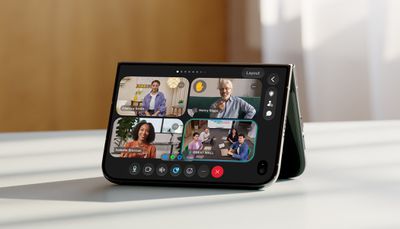
Popular video meeting app Webex was today updated with support for Apple's iPhone Duo. Webex works open or closed, in portrait or landscape mode, and even in a laptop or tent position.
When open, the iPhone Duo shows more meeting participants, keeps shared content visible, and gives access to a whiteboard. Multitasking support allows Webex to be used alongside another app with Split View.
Webex Mobile Camera Share lets users stream the iPhone's camera in a meeting when the iPhone Duo is open in a laptop position, so participants can view the live camera feed and annotate it.
Along with iPhone Duo support, Cisco has added the Webex Notetaker Agent to the iPhone app. It can transcribe and summarize in-person conversations and create action items.
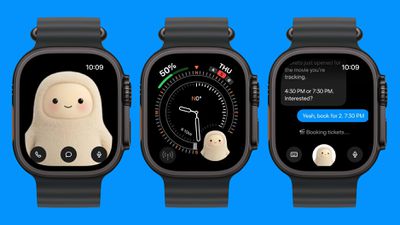
Meta today updated the Muse app for iOS to add Apple Watch support, which means Muse users can access the proactive AI agent from the watch.
The app adds the Muse character to the watch with an option to text it, dictate text to it, or call it. There's also a Muse complication for quick access.
Muse is Meta's personal AI agent that can complete tasks for users. It is available as a standalone app and is also built into Instagram, Facebook, and other Meta apps. The yeti-like character Meta designed to represent Muse has become popular, and it is front and center on the Apple Watch.
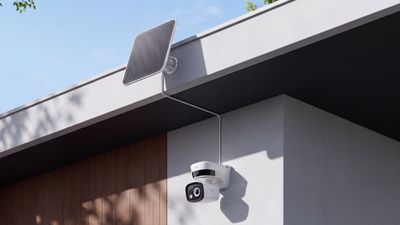
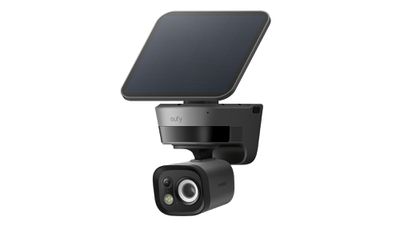
Anker today launched the Eufy TrackLight Cam S1, which it says is the world's first outdoor security camera with an auto-tracking light for actively deterring intruders. The TrackLight Cam S1 is compatible with Apple Home when using the Anker HomeBase, so it can be used alongside other smart home devices in a HomeKit setup.
When a suspicious person is detected, the camera locks on and follows them with a light from up to 12 meters (40 feet) away. The light adjusts with distance, narrowing when someone is far away and broadening as they approach. The camera has 355 degrees of horizontal rotation and can track movement up to 87 degrees per second.
An optional tracking deterrence mode activates the light and a 105-decibel siren at the same time, plus there is a red and blue flashing light mode as an additional deterrent.
The camera records in 4K with 10x digital zoom and night vision to show strangers in the dark. There is a 120-degree floodlight that works alongside the TrackLight, and dual radars offer 180-degree detection up to 40 feet. A Family List in the app allows the homeowner to set known people, so they get a soft, welcoming light as they approach. The feature detects a known phone's Bluetooth.
There's a 15,000mAh battery and a 5.5-watt solar panel for continuous operation, and IP65 dust and water resistance offers protection from the elements. There is no built-in storage, and users will need to add a microSD card or connect to the HomeBase. No subscription is required.
Anker also recently launched its Window Camera E10, a 2.5K resolution camera with anti-reflection and 25 degrees of tilt. It's designed to be put in a window, covering a yard, driveway, or entry without needing to be outdoors.
Note: MacRumors is an affiliate partner with Anker. When you click a link and make a purchase, we may receive a small payment, which helps us keep the site running.
The macOS Golden Gate 27.2.1 update Apple released today addresses the eMudhra certificate vulnerability, and Apple recommends users update to the latest software.
For Macs that run macOS 26 or macOS 15, Apple has released macOS 26.7.3 and macOS 15.8.3.
Apple previously blocked the compromised certificates in Safari, Mail, and apps that use Apple frameworks in October to protect most users, but command-line tools like curl and git were still able to accept them. With macOS 27.2.1, command-line tools will no longer accept the certificates.
Prior to releasing the macOS 27.2.1 update, Apple offered instructions for those who wanted to protect themselves from the compromised eMudhra certificates when using command-line tools, directing users to manually remove the affected root certificates from their Mac's "/etc/ssl/cert.pem" file.
The compromised security certificates were issued by certificate authority eMudhra. An investigation launched by Mozilla found the certificates used private key values below 256, making them trivial to recover. Attackers could use the keys to create fraudulent certificates that appeared valid for any website.
Apple also fixed the issue in the macOS Golden Gate 27.3 beta, but with the fix also included in macOS 27.2.1, users won't need to wait until December for protection.
Anthropic today introduced its latest models, Claude Fable 5.2 and Claude Mythos 5.2, which have improvements in coding, reasoning, and vision.
Anthropic says Fable 5.2 and Mythos 5.2 communicate more clearly than the 5.1 versions, with outputs generated up to 30 percent faster. Fable 5.2 uses fewer tokens than Fable 5.1 on challenging tasks when set to medium effort.
The company suggests using Fable and Mythos for "the most ambitious, open-ended technical work." Anthropic recommends starting with Opus 5.5 for most coding and knowledge tasks, then switching to a model like Fable or Mythos that can handle more complex requests, or stepping down to a more affordable model like Sonnet or Haiku 5.5.
Benchmarks suggest Fable and Mythos 5.2 outperform Opus 5.5 for computer use, knowledge work, cybersecurity, agentic scientific research, agentic coding, multidisciplinary reasoning, and more.
Both use the same underlying model, but the public-facing Fable 5.2 model has cybersecurity and biology safeguards to prevent misuse. Compared to Fable 5.1, Fable 5.2 has approximately 55 percent fewer blocks. Mythos does not have the same limitations as Fable, and it is available through Anthropic's Life Sciences and Cyber Verification Programs as well as through Claude Security on Enterprise plans.
Fable 5.2 is available today on all platforms. Subscribers on eligible paid plans have extra Fable usage this week, with one to three Fable resets based on subscription length. Fable is included for up to 50 percent of weekly usage limits for Pro plans and standard seats on the Team plan. A fast mode that speeds up token generation by up to 2.5 times is available on Claude Code, the Claude Platform, Claude Models on Google Cloud, and Microsoft Foundry.
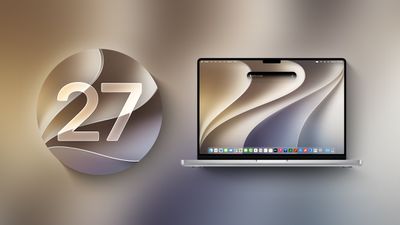
Apple today released macOS Golden Gate 27.2.1, a minor update for the macOS Golden Gate operating system.
macOS Golden Gate includes bug fixes and security updates, according to Apple's release notes. The update likely includes a fix to prevent command-line tools from accepting eMudhra's compromised web certificates.
Apple already blocked the compromised certificates on October 19, so most users are already protected.
You can download macOS Golden Gate 27.2.1 over the air through the Software Update section of the System Settings app.
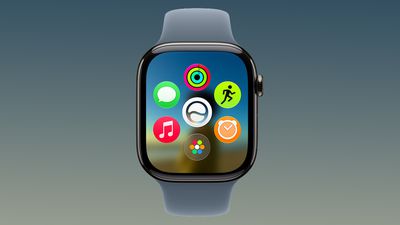
Apple today released new watchOS 27.2.1 and visionOS 27.2.1 updates, with the software coming two weeks after the launch of watchOS 27.2 and visionOS 27.2.
According to Apple's release notes, the watchOS update includes security fixes, while the visionOS 27.2.1 update includes security updates and bug fixes.
The new software can be installed using the Settings app on each device.
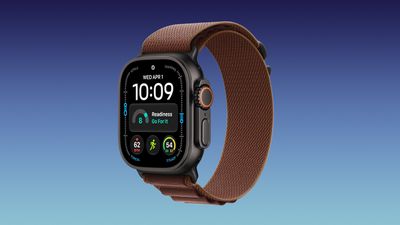
The Apple Watch Ultra 4 has dropped to $699.99 on Amazon, down from $799.00. This is a match of the all-time low price on the new Ultra 4, which launched in September.
Note: MacRumors is an affiliate partner with some of these vendors. When you click a link and make a purchase, we may receive a small payment, which helps us keep the site running.
If you're shopping for a Milanese Loop model, Amazon also has a $99 discount on a few of these devices. You can get the Black Apple Watch Ultra 4 with Black Milanese Loop (Large) for $799.99, down from $899.00. Most of these watches have an estimated delivery date of mid November, and some are offering same-day shipping for Prime members as well.
If you're on the hunt for more discounts, be sure to visit our Apple Deals roundup where we recap the best Apple-related bargains of the past week.
Deals Newsletter
Interested in hearing more about the best deals you can find during the holidays? You can sign up for our Deals Newsletter and we'll keep you updated so you don't miss the biggest deals of the season!
The spot features a martial-arts-style food fight where a man runs into a convenience store to grab a weapon. He's followed by the other combatants, and everyone involved grabs a different food or beverage to fight with.
The cashier makes everyone stop to pay, and the protagonist is able to make his purchases quickly with Apple Pay on his iPhone while the fighters he's facing off against struggle with their wallets. In the course of the fight, one of the fighters grabs the protagonist's iPhone and tries to make a purchase, but can't because Face ID verification is required. The protagonist wins when he purchases a swordfish, causing his opponents to flee.
Apple Pay is a fast, easy, and secure way to pay with iPhone. No digging for cards. Just double-click the side button, glance at your iPhone to authenticate with Face ID, then hold it near the reader. A ding confirms your payment. The built-in security of iPhone makes paying with Apple Pay more secure than using a physical credit or debit card. Use it anywhere you see a contactless payment symbol — from big box retailers to your local corner market.
Apple Pay is a popular contactless payment option available in many countries around the world. It works in retail shops on iPhone and Apple Watch. Apple Pay also works in apps and on the web, and on iPad and Mac for online purchases.
Apple continues to advise customers that certain Apple Intelligence features that rely on its server-side Private Cloud Compute system have daily usage limits, with expanded access to such features to be "available for a fee in the future."
Apple has repeatedly mentioned these upcoming fees in press releases over the past several months, but it has yet to provide any specific details about timing or pricing. The company did confirm that expanded access to the features will eventually be included with select iCloud+ plans, rather than something available for a standalone fee.
Extra server-side usage for a fee will be available for Siri AI, Image Playground, the Extend and Reframe options in the Photos app, shortcuts created with natural language in the Shortcuts app, and more. Apple says daily limits may vary by feature, request complexity, system demand, system policies, and other unspecified factors.
Here are the current iCloud+ plans and prices in the U.S.:
50GB: $0.99/month
200GB: $2.99/month
2TB: $9.99/month
6TB: $29.99/month
12TB: $59.99/month
It is unclear if these prices will increase once the expanded AI access is included.
Apple having said that extra usage will be included with "most" iCloud+ plans seemingly rules out the 50GB plan for $0.99 per month receiving this benefit at a minimum.
Logic Pro
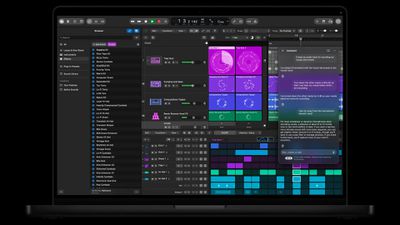
Apple last week updated Logic Pro for Mac with a new intelligent assistant feature that can help creators "navigate production workflows, start a new song, set up a vocal track from a single prompt, or refine an active project."
The intelligent assistant has a monthly usage limit, with expanded usage packs available to users with an active Apple Creator Studio subscription in the United States, Canada, Brazil, France, Germany, India, Mexico, and the United Kingdom. In the U.S., the usage pack is currently priced at $49.99 and valid for one year.
To purchase additional usage, choose Logic Pro from the macOS menu bar, choose Intelligence Features, choose Show Usage, then choose Buy More Usage.
In a support document, Apple says some intelligence features in Apple Creator Studio apps are powered by "third-party providers." For the Logic Pro assistant, it says the feature is "powered by Google Gemini," so it appears it is not considered to be part of Apple Intelligence and thereby extra usage will not be included in iCloud+ plans.


 Apple today announced that an additional four games will be added to the Apple Arcade catalog on Thursday, December 3: LEGO DUPLO Playtime, Plants vs. Zombies: Replanted, solitaire(ish), and Prince of Persia: The Lost Crown+.


 Apple may be working on a way for Maps arrival estimates that account for parking as well as the walk to your destination, according to



 Note: MacRumors is an affiliate partner with some of these vendors. When you click a link and make a purchase, we may receive a small payment, which helps us keep the site running.